
The First Stories Ever Written: From the Epic of Gilgamesh to the World's Oldest Novel
For curious bookworms and young history buffs, a voyage through some of the earliest examples of literature, from a moon priestess’s hymn to Homer’s fantastical tale of magic and monsters, the Odyssey.
27 July, 2026 ● Written by Stefan Bachmann
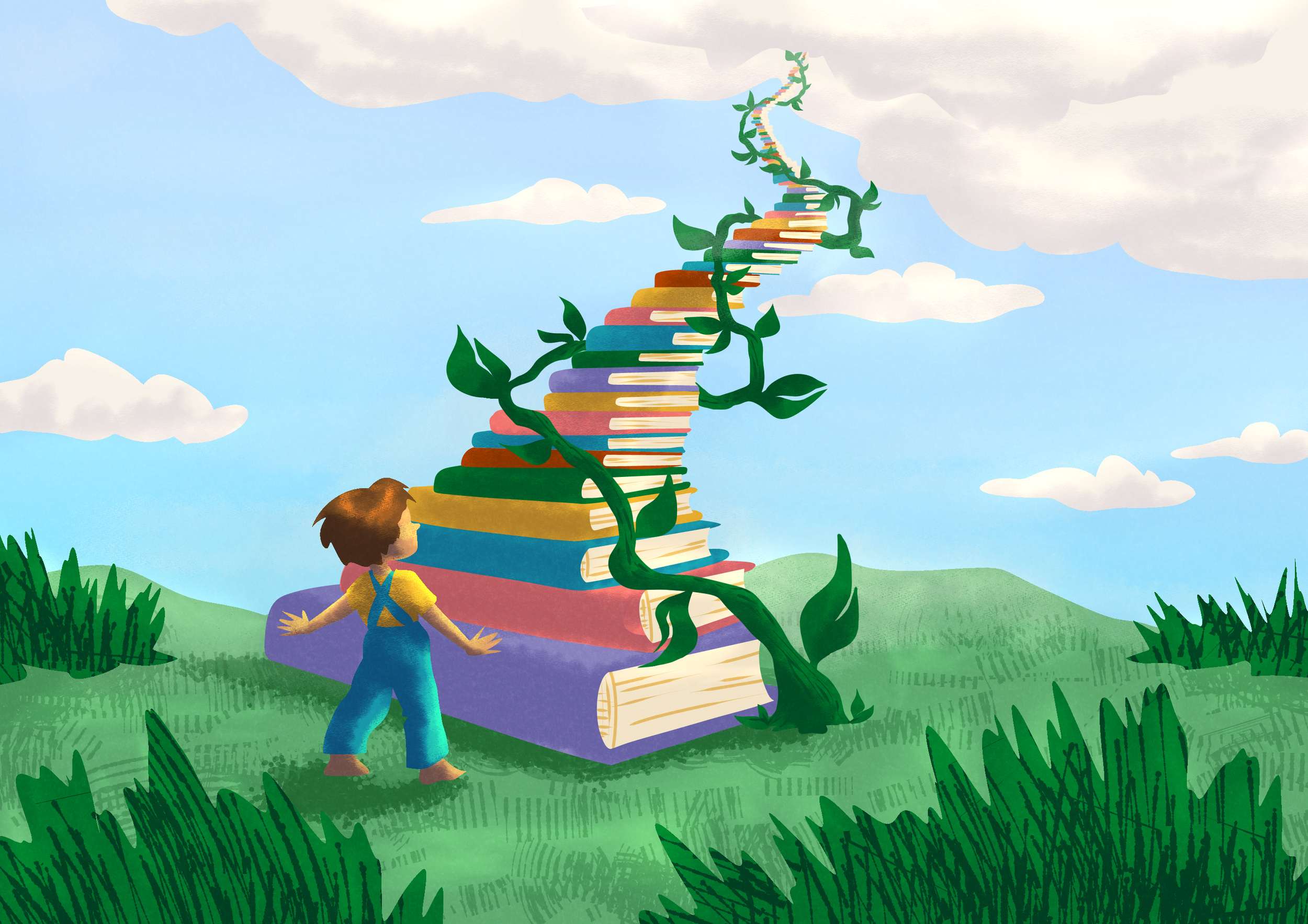
Illustration: Sarah Y. for STORYVOR
The earliest surviving writings aren't exactly thrilling: accounting, tallies of grain, lists of goods, the receipt of 29,086 measures of barley delivered over 37 months to the ancient city of Uruk, some 5,000 years ago.
The earliest surviving stories, on the other hand, are something else entirely. Almost immediately upon inventing written language, people began putting it to more intriguing use. This month, as we explore myths and voyages at STORYVOR, it seems only right to travel all the way back to the source, to the very first stories human beings decided to write down.
Before we set out: almost every "first" in literary history is contested territory. Tablets crumble, papyri burn, and oral traditions rarely survive the leap onto the page. What follows are the oldest works that endure, and the phrase "oldest surviving" is itself a small lesson in literacy, a reminder that what we know depends on what was written down, and on what the centuries chose to spare.
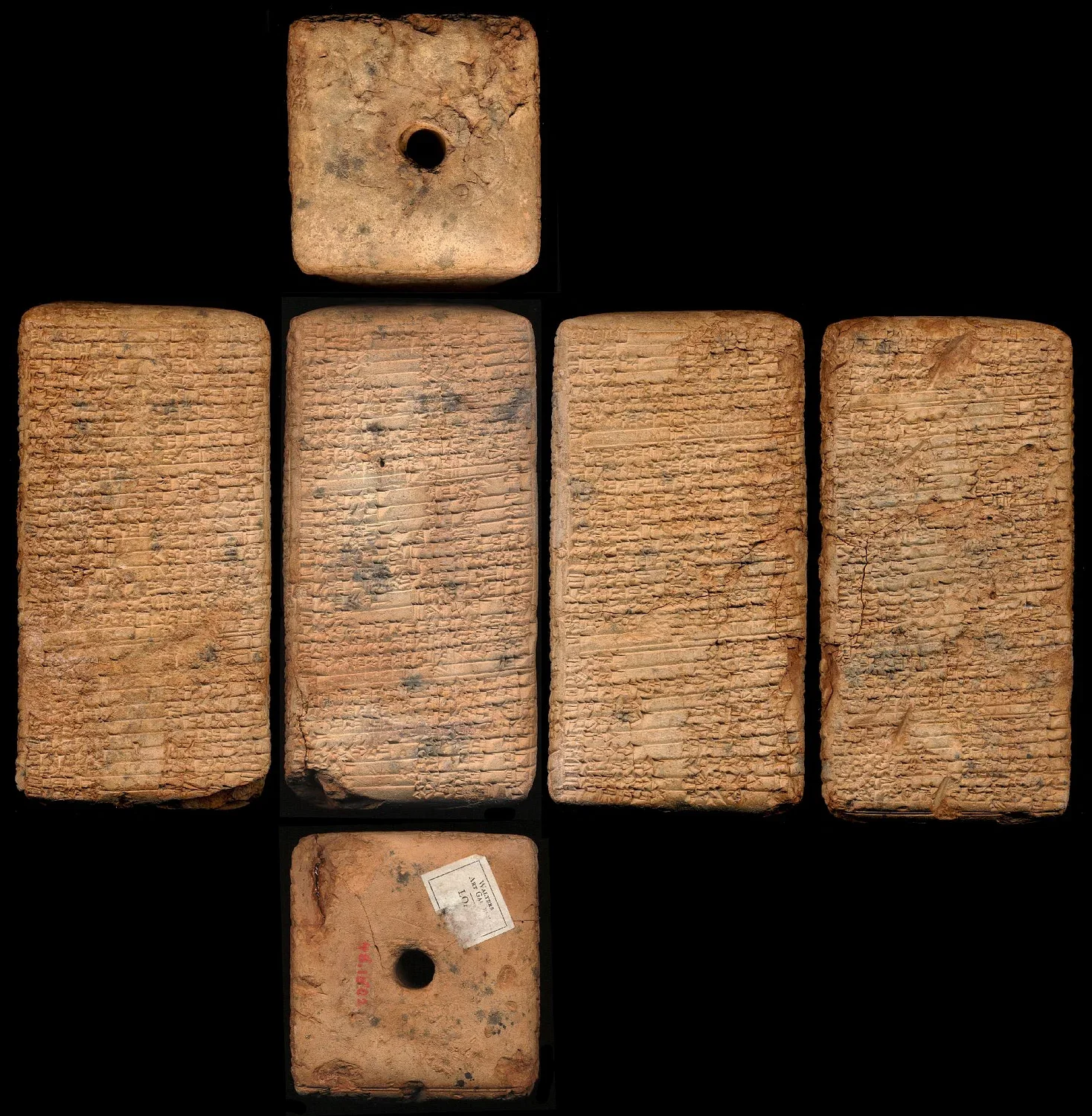
A copy of the Kesh Temple Hymn from between 1800-1600 BC — The Walters Art Museum, Baltimore.
The Oldest Surviving Piece of Literature
Kesh Temple Hymn (written c. 2600–2500 BC)
The earliest works we can confidently call literature come from ancient Sumer, in what is now Iraq: the Kesh Temple Hymn, a song of praise for a sacred building, and the Instructions of Shuruppak, a collection of fatherly advice on how to live well. Copies of both were found on clay tablets dating to around the twenty-sixth century BC, centuries before the pyramids of Giza were finished.
What are these very first pieces of surviving literature about? The Kesh Temple Hymn conjures a temple of gigantic, cosmic proportions, its roots in the underworld, its roof in the heavens, with the gods of Sumer gathered around it. The Instructions, meanwhile, offer practical wisdom, handed from a father to his son. Both have essentially the same purpose: to record what a community holds sacred, how it teaches its children to live.
2. The First Named Author
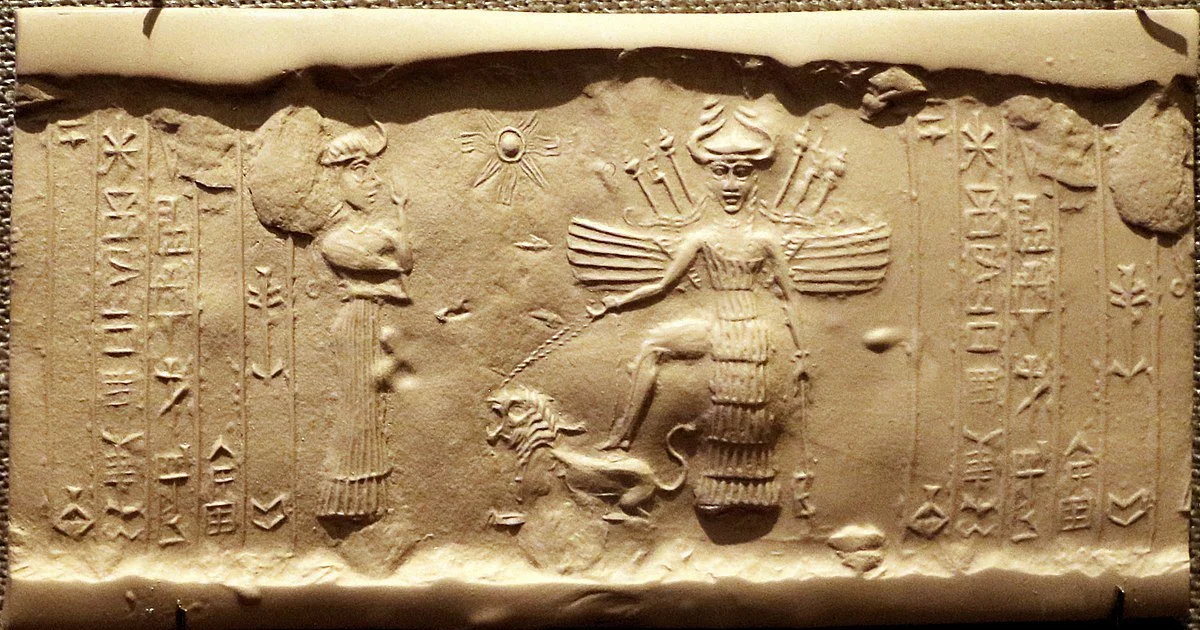
Enheduanna, high priestess of the moon god at Ur (c. 2300 BC)
The earliest tablets are full of the names of the kings who commissioned them and the scribes who copied them. For centuries the writers and composers of the hymns or stories were not thought to be worth naming. This was because storytelling was not yet an individual act but an act of service to a temple, king, or city. In other words, it was done in the name of a collective rather than any single voice.
Then, around 2300 BC, an attributed author emerges. Enheduanna, high priestess of the moon god at Ur and daughter of the emperor Sargon of Akkad, composed hymns that are the earliest surviving works of literature attached to an author's name. In one, she describes her own exile and her struggle to write, making her not only the first named author but arguably the first to write about being a writer.
This is one of the great thresholds in the history of literacy, when the word "I" entered literature, and with it, self-expression. For the first time, a person's own experience was precisely, deliberately shaped into language.
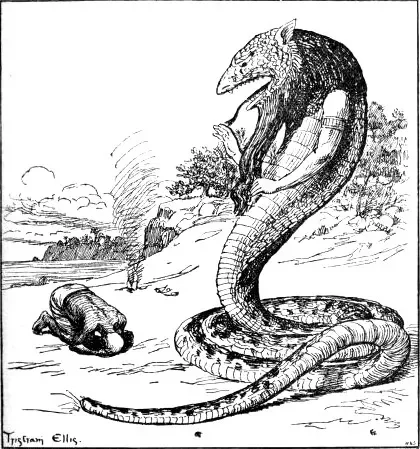
“The Inquiry” by Tristram Ellis (1844 – 1922)
3. The First Story Within a Story
The Tale of the Shipwrecked Sailor (c. 2000 BC)
From Egypt's Middle Kingdom comes the Tale of the Shipwrecked Sailor. A storm destroys a ship on the Red Sea, and a lone survivor washes up on a mysterious island, where he meets an enormous golden serpent who comforts him, prophesies his rescue, and tells him a story of its own loss.
What’s particularly interesting about it? It’s a story within a story, a narrator handing the tale to another narrator. It is one of the earliest examples of a frame narrative, the device that would later structure the Odyssey, One Thousand and One Nights, and countless other myths, epics, and novels. Also striking about this story: the serpent consoles the grieving sailor with a tale of its own grief. Already, storytelling is being used as a tool for empathy, a way of making sense of loss, and a passing of hard-won understanding from one soul to another. All of this carries on in stories and literature to this day.
For a more in-depth look at this story’s hieroglyphics and exact translations, check out this academic paper.
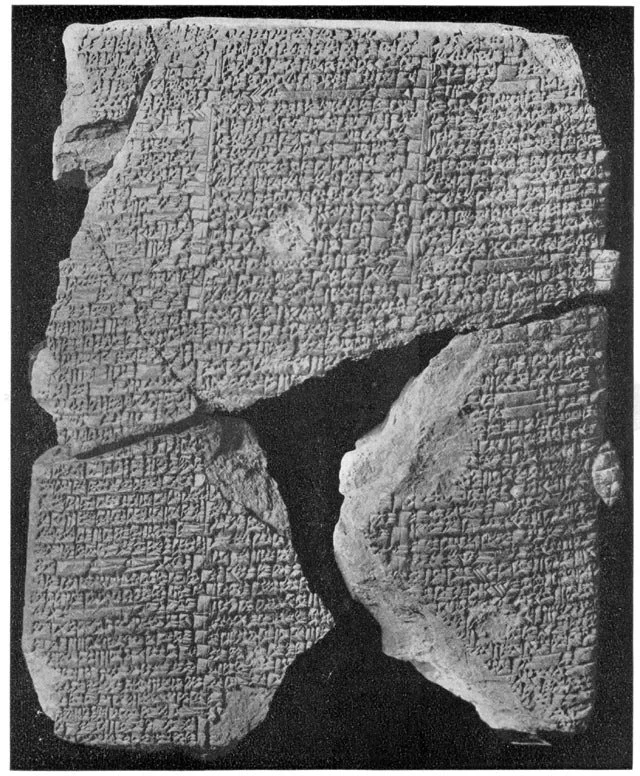
The Yale Tablet, one of the oldest surviving tablets of the Epic of Gilgamesh.
4. The First Great Epic
The Epic of Gilgamesh (c. 2100–1200 BC)
The Epic of Gilgamesh began as a cycle of Sumerian poems around 2100 BC and reached its fullest form, the so-called Standard Babylonian Version attributed to the scholar-priest Sin-leqi-unninni, centuries later. It is the first long, unified literary work we possess: the story of a king who, shattered by the death of his friend, sets out to defeat death itself. On his journeys, he battles the monster Humbaba of the Cedar Forest, defeats a vengeful bull sent down from heaven, faces scorpion-people, runs the pitch-dark Road of the Sun, and finds, at the edge of the world, Utnapishtim, survivor of a great flood.
But the most remarkable thing about Gilgamesh is how it ends. The hero fails to win immortality. His consolation, the reward the epic offers in place of eternal life, is the written record of his journey. The poem opens by inviting the reader to find the tablet of lapis lazuli on which Gilgamesh inscribed his story, and it closes with the very lines that opening promised, becoming the tablet in the reader's hands. In other words, the first great epic in human history is, at its core, an argument for literacy: we die, but what we write down endures. Having survived four thousand years, Gilgamesh’s story proves its own point immaculately.
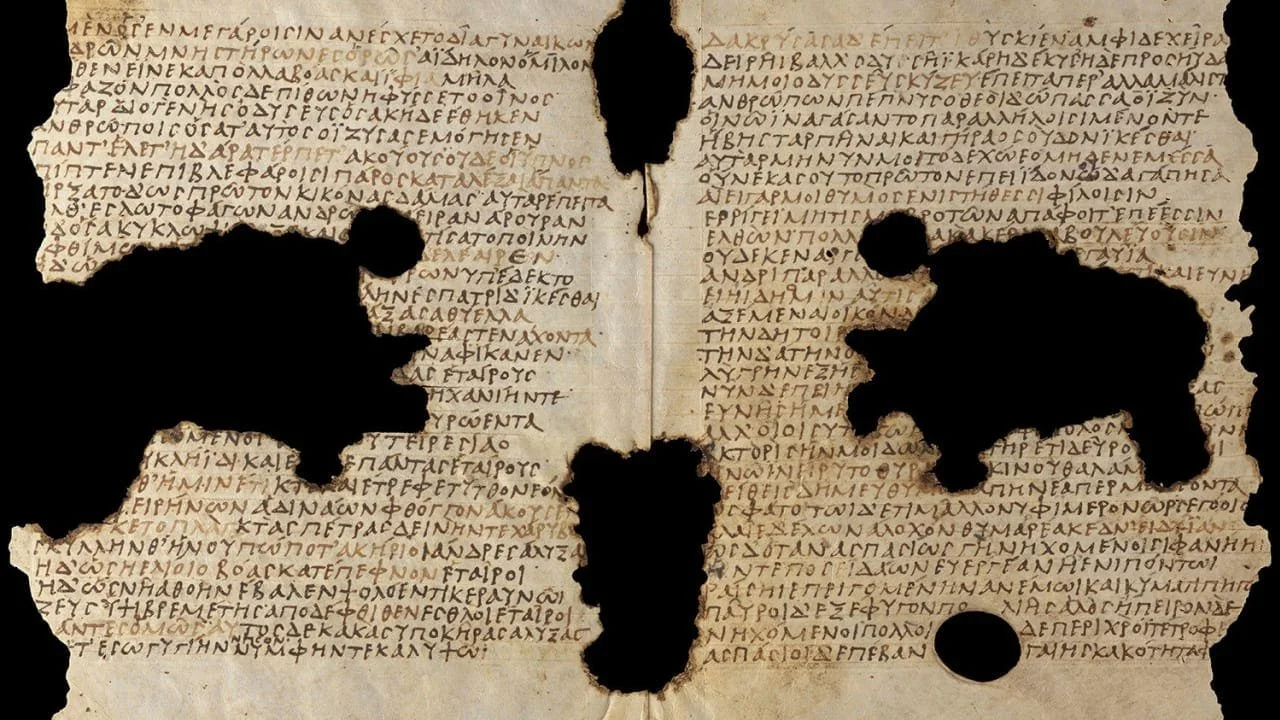
The earliest surviving example of Homer’s Odyssey in book form, over 1,700 years old. Photo credit: The John Rylands Library at The University of Manchester
5. The Voyage That Shaped All Voyages
Homer’s Odyssey (c. 8th Century BC)
Homer's Odyssey occupies a special place in this history, because it was not originally written at all. It was told. The research of Milman Parry and Albert Lord in the twentieth century demonstrated that the Homeric epics bear the fingerprints of oral-formulaic composition. They were built from memorized formulas and patterns, composed and recomposed in live performance, and only later fixed in writing.
This makes the Odyssey a wonderful illustration of the path literature itself has traveled. Before writing was widely taught and practiced, spoken epics allowed cultures to store their history, values, and knowledge in narrative form and pass it across generations. Telling a story well was an art in itself, and the skill was prized accordingly. In early Greece, the singer of tales held a community's memory in trust. In the Odyssey itself, the blind bard Demodokos sings at a king's court, seated in honor among the nobles.
The value of telling stories aloud goes far beyond ancient history. It’s a vital part of almost every aspect of modern life, from politics to business, where spoken communication still carries the day. Furthermore, research on children's language development consistently finds that encouraging early storytelling — for example, the ability to tell and retell a structured story — is linked to improved reading comprehension, which in turn is linked to academic success. The path our species took into literacy, from spoken story to written text, is the same path every child takes today.
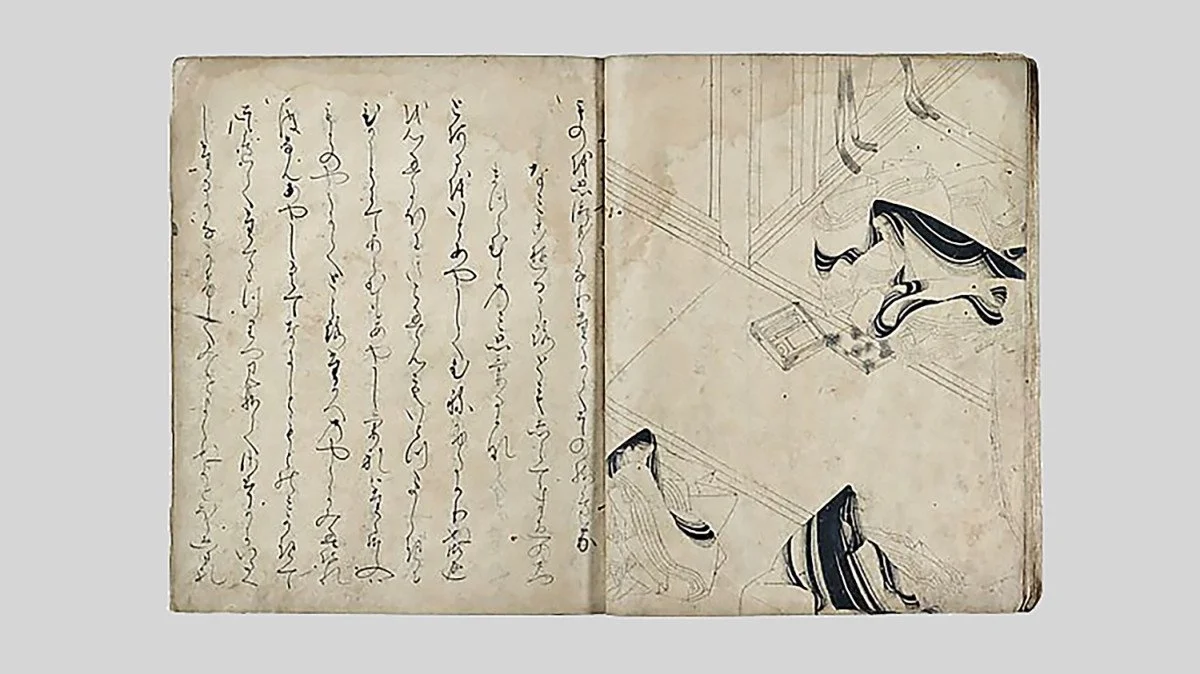
An illustrated copy of The Tale of Genji from the 15th century — bookbinding.com
6. The First Novel
The Tale of Genji (c. 1010 AD)
Roughly a thousand years ago, at the imperial court of Heian Japan, a lady-in-waiting known to us as Murasaki Shikibu composed The Tale of Genji, widely regarded as the world's first novel. Across its enormous length, it follows the life of Genji, an emperor's son who is removed from the line of succession. It also offered something truly new to literature at the time: sustained psychological interiority and an attention to inner life that would not appear in European fiction for centuries.
It is a fitting place to arrive. Literature that began with hymns for temples and instructions for living, with the shared business of building a civilization, turns at last to the mapping of a single human’s emotions and thoughts.
Why This Matters for Young Readers and Writers
Writing was invented for bookkeeping, but humans almost immediately bent it toward something greater. They used it to create myths and heroes, teach their children how to live, speak as individuals for the first time, build the craft of narrative, carry whole cultures across generations, and finally turn inward to map the nuances of human thoughts and emotions. That sequence is not an aside in the building of civilizations. It is very close to the thing itself.
For parents, teachers, and young readers and writers, this history carries a wonderful message: every story we read, write, or tell joins a tradition almost as old as humanity itself. We often talk about the benefits of literacy for the individual. Seen at this scale, its importance becomes vaster. Literacy is how information travels beyond one mind or one lifetime, how individuals, cities, and entire countries can come to understand each other, how the present can learn from the past, how knowledge accumulates into science and discovery, and how civilization itself persists. Without stories, and the ability to read, write, and tell them, little of what we have today would exist at all.
A note on sources: dates and attributions for ancient texts are scholarly estimates and remain subjects of active research. The framing "oldest surviving" is used deliberately throughout. Key reference points: the Abu Salabikh tablets (Kesh Temple Hymn, Instructions of Shuruppak); the Exaltation of Inanna and related hymns attributed to Enheduanna; Papyrus Leningrad 1115 (Tale of the Shipwrecked Sailor); the Standard Babylonian Epic of Gilgamesh; Milman Parry and Albert B. Lord's scholarship on oral-formulaic composition (Lord, "The Singer of Tales," 1960); and Murasaki Shikibu's "The Tale of Genji" (c. 1010 AD).

Stefan Bachmann
Editorial Director
Stefan Bachmann has worked widely in education, cultural programming, and literacy advocacy for over fifteen years. He is an internationally bestselling author of children’s books, co-founder of Foundations in Literacy, co-president of AUTILLUS, the Swiss Association of Children’s Authors and Illustrators, as well as a member of various advisory boards and committees. He studied composition and theory at the Zürich University of Arts.






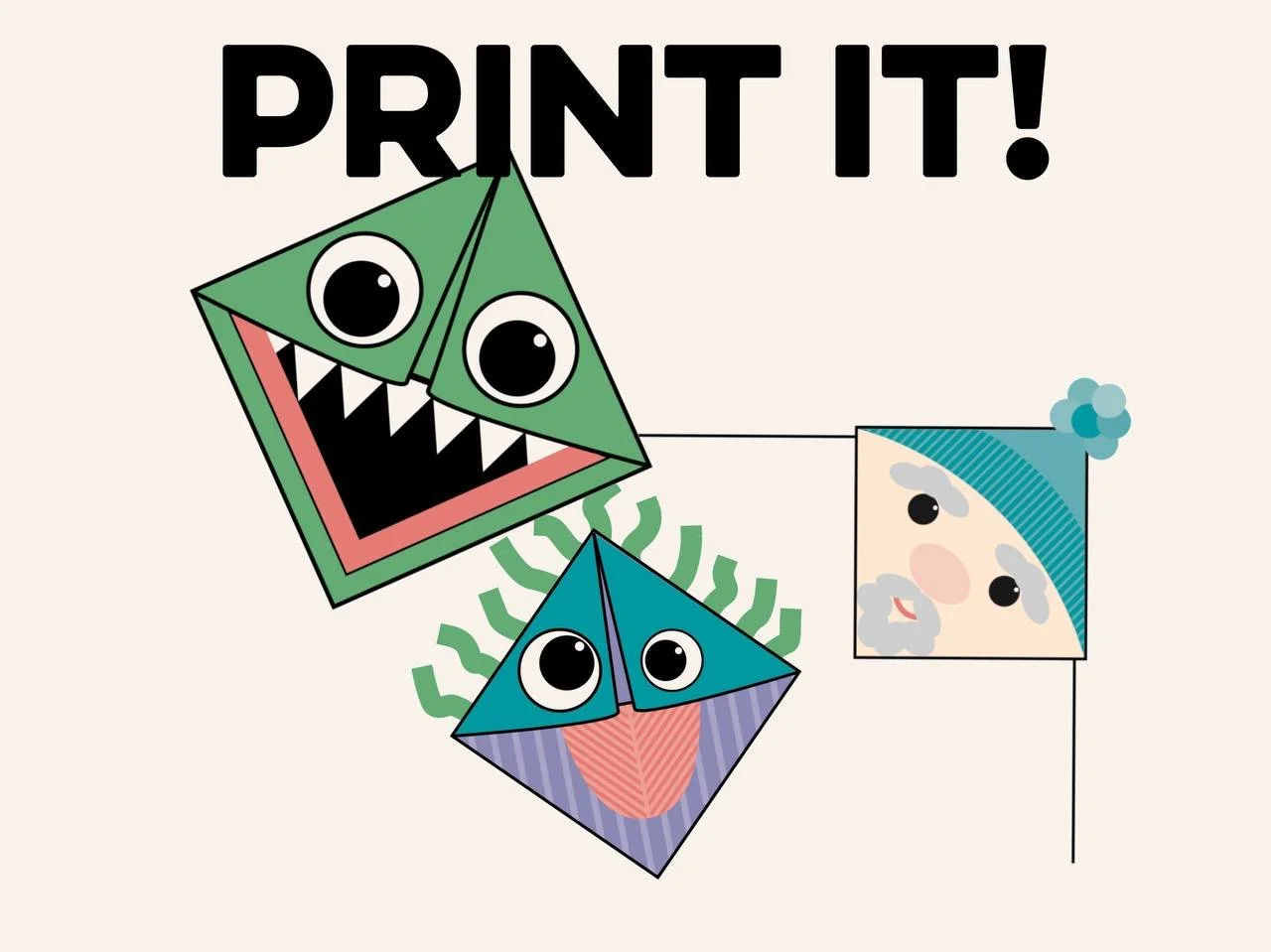

Sarah Y.'s illustrated, printable play-set turns a few sheets of paper into a castle, a river, a dragon, and a story. Use it in class for crafting time, storytime, and world-building.