
When Literature Resists: Instituto Poesiar Seeks to Build Latin America’s First School for Poets
Like many literary forms, poetry faces a crisis of under-appreciation. One institution in Brazil is working to create a space for it.
29 June, 2026 ● Written by Stefan Bachmann

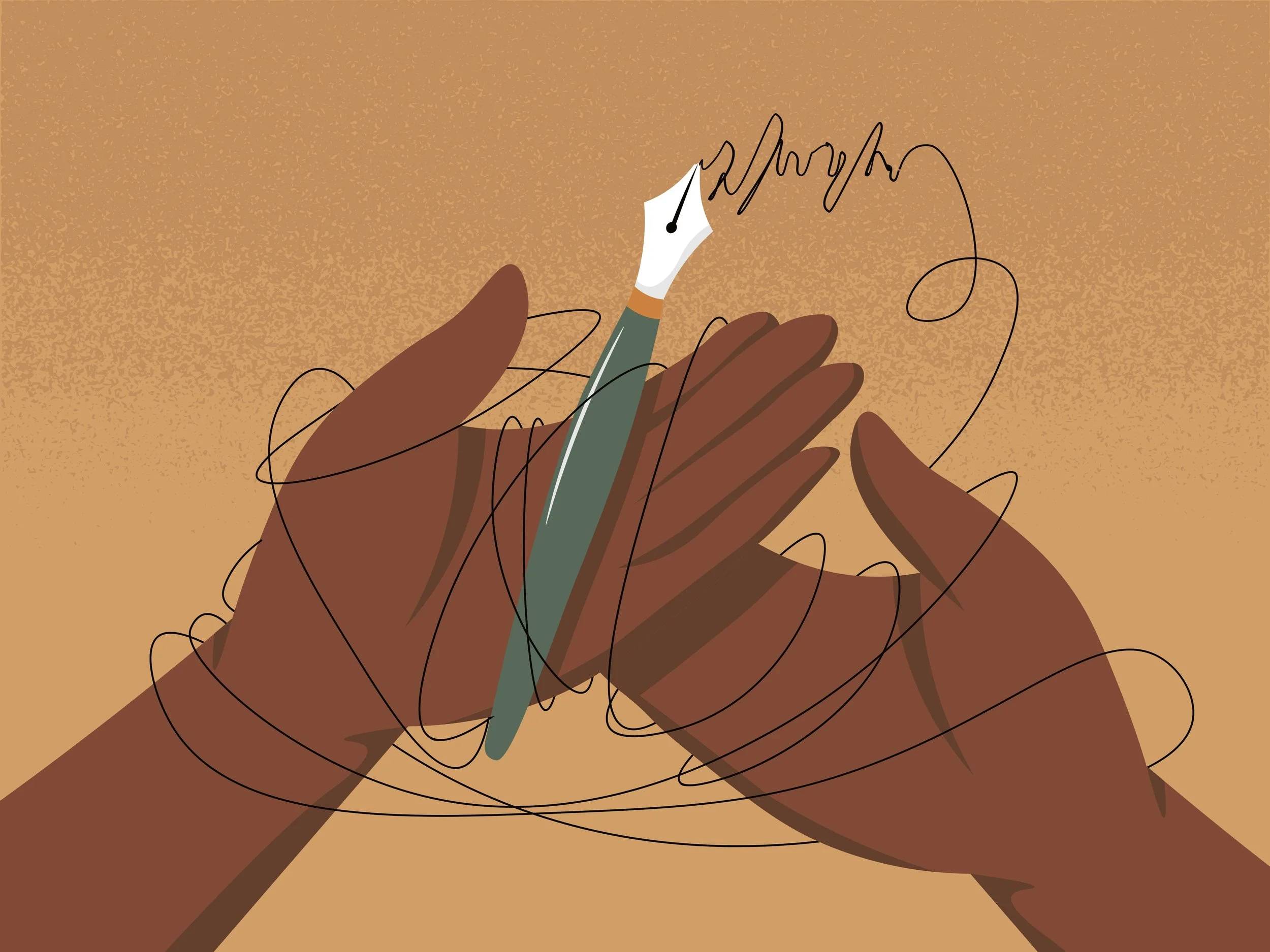
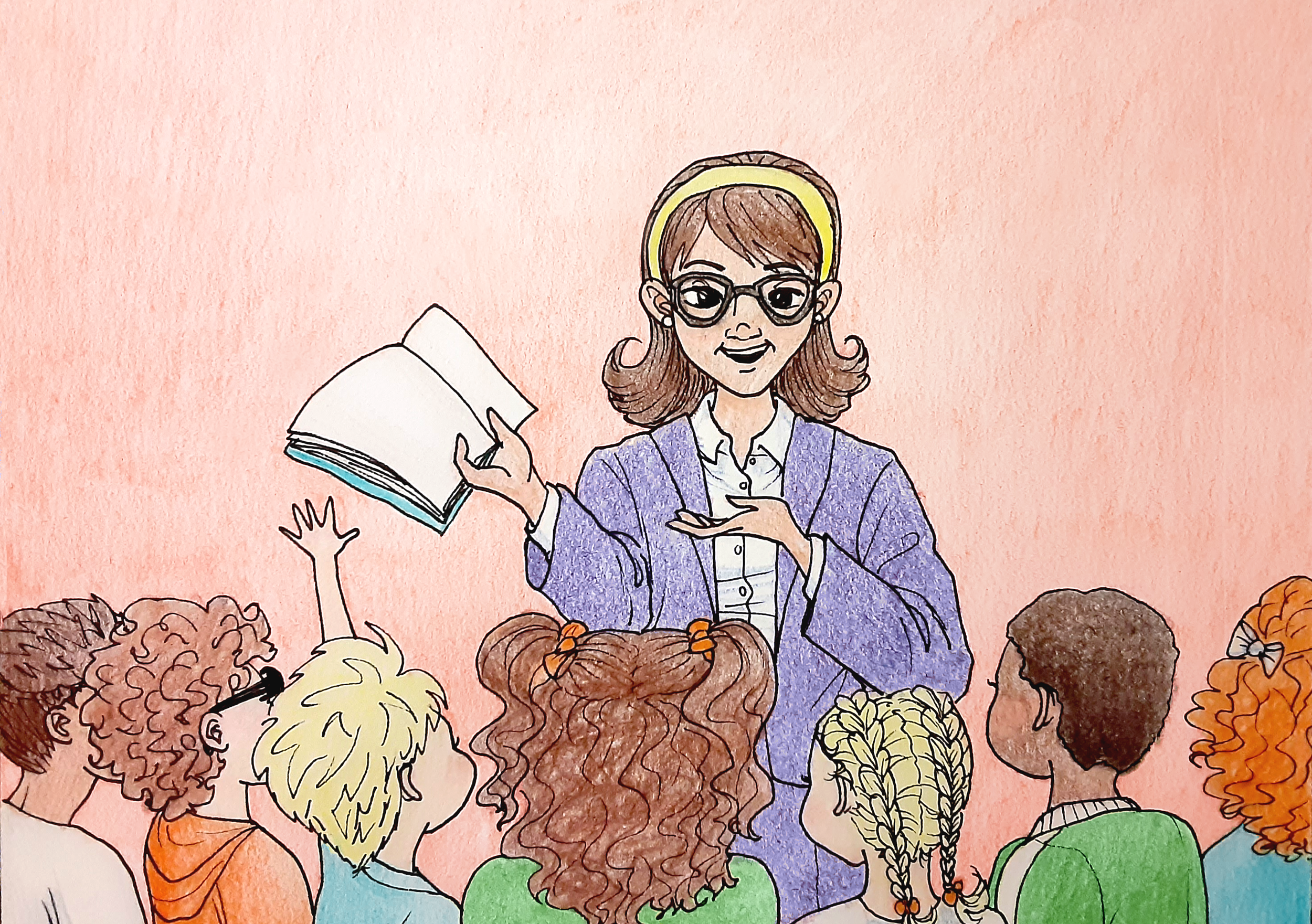
Illustration by Stefan Bachmann for STORYVOR
In 2024, a study published in Scientific Reports and picked up widely, including by the Washington Post, made an alarming claim: Readers were failing to distinguish between AI-generated poetry and work by Shakespeare, Emily Dickinson, T.S. Eliot, and Sylvia Plath. Less than half of participants correctly identified which poems were written by humans. Worse, they actually preferred the AI-generated poems, and were more likely to guess those were written by humans than the real works by famous poets.
The finding generated outrage, but not quite for the reasons it probably should have. A careful read of the research reveals that participants had a weak understanding of poetry and little familiarity with the works in question. More than 90% never or rarely read poetry, leading them to prefer the simplicity of AI-generated poetry and misinterpret the complexity of human poems as incoherence. In short, the study found that the poems the subjects preferred were the ones that asked least of them.
What the study also did not reckon with was the more fundamental question of what AI actually does. It does not create. It predicts, statistically averaging vast bodies of existing human work into outputs calibrated for legibility and broad appeal. That a general audience, largely unacquainted with poetry, found these simplified outputs more accessible than Dickinson or Eliot is less evidence of the wondrous achievements of AI and more a marker of a rather melancholy cultural and educational loss.
As literacy rates decline, the ability to read longer, more demanding texts — including poetry, with its meters, rhythms, and abstractions — declines as well. The result, of course, is that the skills required to interpret complex, nuanced human language become increasingly rare and valuable.
Which is not to say that countless, dedicated teachers and parents aren’t working valiantly against this cultural and educational slide. Some, like poets Marcela Oseas Ferreira and Caio Lucílio Silva Evangelista, are boldly choosing the opposite path. How? By founding the first school for poets in Brazil, working with young people to generate interest in literacy, and holding out for true human expression and art.
We are thrilled to welcome Marcela and Caio to these pages. Below they answer a few questions about literacy, poetry, and becoming writers, as well as introduce their organisation, the Instituto Poesiar in Brazil.

Interview with Marcela Oseas Ferreira and Caio Lucílio Silva Evangelista
Founders of Instituto Poesiar, Brazil
STORYVOR: What inspired you to start working on literacy and reader development in Brazil?
Marcela: When I was at primary school, a writer visited my school. Upon meeting him, I realised he wasn’t a distant or unapproachable figure, but an ordinary person, just like anyone else. That experience showed me that writing books wasn’t a dream reserved for the few, but a real possibility.
Caio: Something similar happened to me. Also whilst at school, a teacher organised an open poetry competition and encouraged me to take part. For the first time, I discovered that I could write freely, without worrying about following rigid models or set formulas. That experience revealed the power of literary creation as a form of expression and belonging.
STORYVOR: Which projects or activities do you consider most effective for connecting young people to stories and poetry?
The most effective projects are those that make literature a living experience. At the Poesiar Institute, we run creative writing workshops, meetings with authors, literary gatherings, collaborative book projects and activities that encourage participants to tell their own stories.
We have noticed that young people become more engaged with reading when they stop being mere spectators and start becoming creators. When a teenager writes their first poem, shares a piece at a literary gathering, or sees their work published, they discover that literature belongs to them too.
Poetry, in particular, has the power to engage with the emotions, dreams and challenges that are part of youth. It builds bridges between individual and collective experience. When a young person realises that their voice matters, reading ceases to be a chore and becomes a discovery; from this springs one of the themes of our literary gatherings: the voice of poetry from every heart.
STORYVOR: Why poetry?
Because poetry is one of the most human forms of communication; it teaches us to look at the world with greater attention and sensitivity. In an age marked by speed and information overload, it invites us to slow down, observe and reflect.
Poetry is an extraordinary tool because it develops the imagination, empathy and the ability to express oneself. It helps us to name feelings, understand different perspectives, and develop a deeper relationship with language.
Poetry is not merely a literary genre. It is a form of emotional and human education. That is why we believe it should occupy a central place in the education of readers.
STORYVOR: Was there a book that turned you into a reader? And a book that made you want to write?
Caio: The book that turned me into a reader was You Are Special by Max Lucado, back in my childhood. It was the first story I ever heard being read aloud, and I remember perfectly the enchantment I felt at that moment. That experience sparked an enormous curiosity in me for stories, and ever since, I’ve wanted to discover new books and new worlds through reading.
As for the book that made me want to write, there wasn’t really one, as the desire to write had already been in my heart for a long time; I’ve always enjoyed writing letters to my family and friends. What actually happened was that a book made me believe in my own style of writing. When I was younger, I admired long poems full of complex structures. I tried to write in that style, but found it very difficult and even began to think that perhaps I wasn’t capable of writing a poem. One day, I spoke to my teacher about this frustration. It was then that she told me something I’ve never forgotten: perhaps the problem wasn’t my ability to write, but the fact that I was trying to write in a style that wasn’t my own.
I told her I liked making up words and playing with language, but I believed that wasn’t allowed in poetry. She took me to the school library and introduced me to Manoel de Barros. When I picked up Livro Sobre Nada, I was fascinated. His writing was different from what I was used to finding in books. There was freedom, invention, simplicity and a beauty born of looking at the little things.
Up until that moment, I’d been afraid that my short poems weren’t real poems. Upon discovering a writer whose language resonated with the way I liked to write, I felt something very important: a sense of belonging. For the first time, I realised there was a place for my voice in literature. Manoel de Barros didn’t just inspire me to write; he helped me realise that my writing had value too.
Marcela: I can’t say whether there was a single book that turned me into a reader. I believe I was shaped by many books, many encounters and many discoveries throughout my life. Each book I read added something to my development, broadening my perspective and my understanding of the world and of people. Among these books, I have a special fondness for De Amora e Amor by Elias José. His short stories showed me that literature could explore deep emotions without losing its lightness, and that experience stayed with me long after I’d closed the book.
As for the desire to write, it arose from an experience that predates any specific book. When I was a child, I attended a state school and had the opportunity to see a writer for the first time. Until then, books had seemed to me like magical objects that simply existed. Discovering that there was a person behind the stories was a revelation. For the first time, I understood that literature was created by real people, people who observed the world, felt deeply, and transformed their experiences into words. It was at that moment that I realised literature was not a distant, inaccessible place. That was where the possibility of writing was born, the feeling that I too could be part of that universe.
STORYVOR: Which books or poems do you think everyone should read?
Caio: It’s difficult to choose just a few works or authors, but although I currently live in Santa Catarina, I was born in the state of Minas Gerais, and I would highlight names from Minas Gerais who inspire me greatly and have left a deep mark on Brazilian literature. They are: Carlos Drummond de Andrade, for his ability to find depth in life’s simplest experiences; Guimarães Rosa, especially for Grande Sertão: Veredas, a work that reveals the richness of language and the human condition; and Conceição Evaristo, whose writing combines memory, sensitivity and social transformation.
Marcela: It’s always difficult to answer this question, because I believe that every reader finds the right book at the right moment in their life. But if I could offer a few suggestions, I’d start with the authors who have had a profound impact on me and helped shape the way I see the world.
Among the poets, I would highlight Cecília Meireles, Cora Coralina and Elias José. There is a delicacy and a humanity in their words that transcends generations. Cecília teaches us to listen to the music hidden in simple things. Elias José brings us closer to childhood, affection and imagination. And Cora Coralina holds a very special place in my heart. Her poetry reminds us that greatness can dwell in simplicity, that life is made up of new beginnings and that it is never too late to blossom. There is a profoundly human wisdom in her verses, a kind of embrace that welcomes us without judgement.
I also believe that everyone should allow themselves to discover the work of Clarice Lispector, whose writing invites us to delve into the depths of the human experience.
But, above any list, I believe everyone should read poetry.
STORYVOR: How would you like to see the Instituto Poesiar develop in the coming years?
We dream that the Instituto Poesiar will become an international benchmark in the promotion of reading, writing, and poetry. We want to establish our headquarters (a physical space), expand our reach, create new educational programmes, strengthen partnerships, and offer more opportunities for children, young people, and writers. As part of these initiatives, we also wish to promote cultural exchanges between students from different countries, broadening the dialogue between cultures through literature. Furthermore, we want to continue enabling the publication of new works, supporting the development of new writers, readers, and lovers of literature, and creating real pathways for literary production to flourish. We also wish to consolidate our work as the first School of Poets in Latin America, nurturing new generations of readers and authors committed to culture, education, and social transformation. Our greatest dream is that more and more people will find, through literature, a path to expression, dignity, imagination, and hope.
About Instituto Poesiar
Since 2023, the Poesiar Institute has been working to promote and encourage reading and literature, particularly by training new poets and writers in Brazil and around the world. One of the Institute’s mottos is “to make the voice of every heart resound”, as the poets believe that access to reading and, above all, the opportunity to express oneself through writing is not a privilege for the few, but a right for all.
The Institute’s initiatives to promote reading and literature have thus far been carried out without any financial support or sponsorship; in other words, all activities have been funded entirely by the founders’ own resources. Currently, the Institute’s main activities include book donations, literary gatherings, discussion groups, and talks held in public spaces and institutions. All events are free and open to the public.
Brazil is currently facing a reading crisis. Libraries are losing funding and access to books remains unequal in many regions of the country; yet, amidst this situation, the Poesiar Institute has chosen not to give up. Poesiar has already travelled to various cities in Brazil and Portugal, such as Carbonita, Belo Horizonte and Diamantina in the state of Minas Gerais, Rolim de Moura in the state of Rondônia, Chapadão do Lageado, Florianópolis and São José in the state of Santa Catarina, Ribeirão Preto in the state of São Paulo, amongst other Brazilian cities, as well as international invitations that have allowed them to travel to Penafiel, Machico, Viseu and Funchal in Portugal.
Many invitations had to be postponed or held virtually due to a lack of support and resources; in the vast majority of cases, this refusal on the part of companies and public authorities is due to political issues. During each of the poets’ journeys, they realised that in many social contexts in Brazil and abroad, particularly in the most vulnerable communities, literature is still perceived as something distant and, consequently, poetry occupies an even smaller space in people’s lives. The Poesiar Institute was founded to bridge this gap and to remind us that art exists to bring people together; thus, the Institute’s mission goes far beyond teaching writing techniques, but rather to show that literature is a bridge, a refuge and a force for transformation, and that reading goes beyond deciphering words to understanding emotions.
Even in the face of financial difficulties, the Poesiar Institute continues to expand its activities and build support networks, seeking sponsors and forging connections that transcend borders. Today, it is striving to establish the headquarters of the First School of Poets in Latin America, a permanent physical space dedicated exclusively to literary education, encouraging reading, fostering new authors, promoting cultural exchanges, and hosting various training programmes, a place where children, teenagers, adults, and the elderly can be welcomed through the power of words.
Currently, the Poesiar Institute is small in structure but immense in purpose, and as long as there is anyone willing to open a book, write a poem, paint a canvas, dance, sing and be enchanted by the beauty of the world, it will continue to persevere.
Visit the Instituto Poesiar’s website to find out more about their work.

Marcela Oseas Ferreira & Caio Lucílio Silva Evangelista
Authors, poets, and founders of the Poesiar Institute
Marcela Oseas Ferreira is a poet and novelist, author of the works Soltura (2021), Catapulta (2024) and Alba (2025).
Caio Lucílio Silva Evangelista is a philosopher, writer, teacher and poet, author of the works O gosto das nuvens (2020), O cheiro das montanhas (2022), O vento tem textura de estrela (2024) and O Aprendiz das Águas (2025).





Sarah Y.'s illustrated, printable play-set turns a few sheets of paper into a castle, a river, a dragon, and a story. Use it in class for crafting time, storytime, and world-building.