
Almost every story has the same bones. We call them “Story Bones.” This guide for teachers, classrooms, and families shows how to find them, understand them, and make them come alive.
5 November, 2026 ● Written by Sarah Silverkey
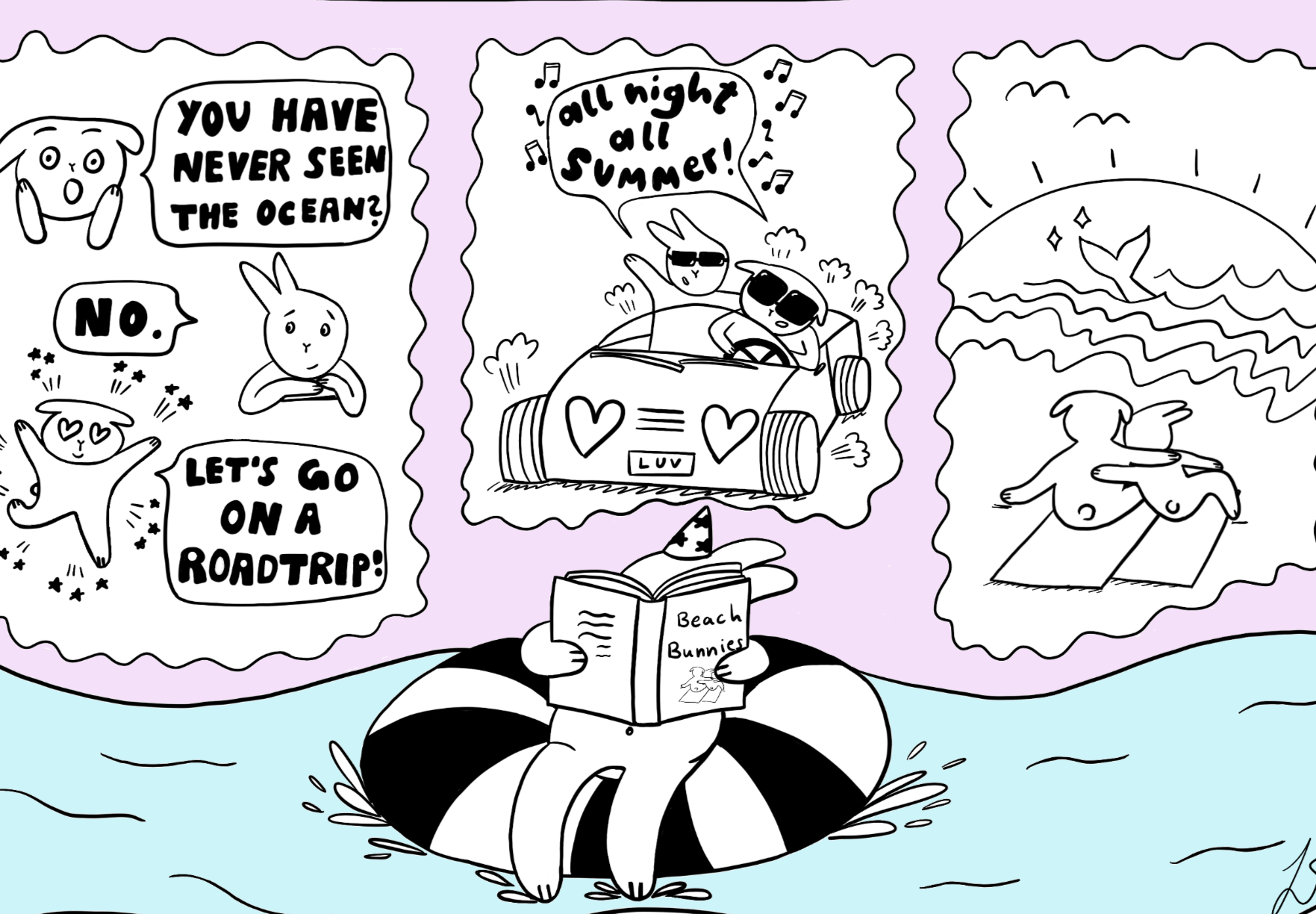
Illustration Andania Humaira for Unsplash+
Last month, we shared a teaching resource on how to make a book, from its cover to its pages, with plenty of snipping, sewing, and gluing along the way. But once the book is made, what goes inside? It could become a diary, or a scrapbook full of memories. Or it could hold a story. And that raises the next, inevitable question that every teacher or parent may, at some point, be faced with: “How do I write a story?”
Writing a story isn’t a mysterious talent reserved for a gifted few. Can it seem daunting and complicated? Yes. But like handwriting, multiplication, or riding a bike, it’s a skill anyone can learn, because all stories are built from the same basic parts. We like to call them “Story Bones.” They give teachers a simple way to explain how stories work, and give children a framework they can shape however they like. Along the way, writing stories builds literacy skills, vocabulary, expression, and critical thinking, which makes it well worth the effort.
So what is a story, exactly? At its core, a story shows change over time. Something happens, then something else, and with each step, something changes. That’s the bare bones. On its own, it isn’t very exciting, but that’s also the beauty of it. Once writer of any age knows the bones of story, they can arrange them, and make them come alive, in any way they choose.
Patterns matter, too. Our minds find familiar story shapes deeply satisfying. It’s why young children want the same book read two thousand times, why teens devour series with near-identical plots, and why adults say, “I like mysteries.” We want the good characters to win, the villains to get their just desserts, and the ending to make sense. We enjoy twists and turns along the way, but we want to sense the pattern of the stories we love.
So let’s look at that pattern — that skeleton, if you will — and then at the elements that make it up.
What are the bones of a story?
The Backbone: Structure
Every story needs a beginning, a middle, and an end.
Finding them isn’t as easy as it sounds. The beginning can be especially tricky, because we have to choose the moment to jump into the story. The middle is where all the changes happen. The ending comes once we’ve reached what we set out to do, and then we stop.
Some writers like to know the middle and the ending before they start. Others prefer to see where the story takes them. Both approaches work. For teaching, the parts below form the basic structure, and depending on the students’ level, they can be expanded or simplified as needed.
the hook
the problem
the action
the climax
the resolution
The Legs: what the story stands on
A backbone alone can’t go anywhere. To bring a story to life, it needs two legs to stand on. These are:
Who? The characters who face the problem and change along the way.
Where? The setting, the place where it all happens. (The place often dictates who the character is, and what challenges he or she faces.)
The Arms: what the story reaches for
Why? The purpose, what the story wants to show.
How? How the characters grow through what happens to them.
With a backbone and four limbs, the story bones are complete. Now let’s look at each one more closely.
The Backbone
→ The “WHAT” of the story
HOOK: We want to grab the reader’s or listener’s attention right at the beginning. To do this, we write something that raises questions in the reader’s mind and sparks their curiosity. For example: “My spaceship took off in the wrong direction.” Now everyone wants to know many things. What am I doing in a spaceship? What was the right direction? What is the wrong direction? And what will happen now that things have gone wrong? You have their attention. Success!
Or you could have something very ordinary going on, but present it in an odd way: “Mr. Jones was sitting on his porch reading his newspaper, as he does every afternoon. But today, when I rode by on my bike, I saw purple vapors billowing out of his windows and a flock of bats swirling out of his chimney. Also, his cat had turned green.” And again, you have captured the reader’s or listener’s attention by making them ask, “Why?” That is a hook. There are millions of kinds of hooks. Finding one that will introduce the things you want to happen in your story is a fun challenge.
PROBLEM: There is no story without a problem. This is a big rule to remember. A story is about change happening over time, and the change must be interesting for our minds, meaning there must be tension. Many famous stories go from bad to worse to worst, with the tension rising in every chapter until it finally resolves near the end. The problem can be anything, big or small, but to make sure your story feels focused, solving that problem should always remain in sight and on the character’s (and reader’s) mind.
In a mystery, the theft or murder gets solved. In an adventure, the quest takes the characters where they need to be, whether to find a treasure or to defeat evil. Sometimes, the problem is another person, or an external event like a storm that causes chaos and thwarts the characters’ wishes. Before you do anything else in your story, decide what the problem is and how you would like to solve it. (The story might take you in new directions as you write! So don’t worry if the solution isn’t quite what you planned. Also, you can have multiple problems, and multiple challenges a character needs to face.)
ACTION: How your characters solve the problem is the action of the story. Once they have a problem, they decide to do something about it. And maybe they do everything wrong. (Authors are very hard on characters, who must make a lot of mistakes, so that we readers stay interested and learn all the things not to do without having to go through those troubles ourselves.) All of these things make the characters change and make the problem seem very, very complicated. That keeps readers interested.
CLIMAX: After the characters do everything wrong, they get wiser, confront something they didn’t want to confront, find new information, or reach a point in their journey where they discover the right thing to do. Once they act on their newfound wisdom, voilà! The problem becomes solvable.
RESOLUTION: Once the characters do the necessary thing, they finish the quest, capture the bad guy, make it home, become friends, or whatever it is they need to do for the story to have a satisfying and complete ending.
The Legs
→ The “WHO” of the story
A story needs characters to do the action, to solve the problem, and to change, even if the change is small or an internal realization. You can have people characters. You can have animal characters. You could have fantasy characters that you invent yourself. Have fun making the characters, and use both what you know and your own imagination. Just remember that you should know all kinds of things about each of them that the reader will never know. That way, a character won’t suddenly do something he or she couldn’t really do, which would confuse readers and pull them out of the story. You will usually need one or two main characters who do most of the action. You may have some helpers for the main character; these are called secondary characters. You will often have a villain, someone who opposes what the main character is trying to do, someone who is trying to stop the problem from being solved. And then you may or may not have supporting characters who show up to help the story along. This could be a teacher, a store owner, a fairy in a tree, or whatever your story needs. These supporting characters will not appear much in the story, they do not need to change like the main character, and they will not solve the problem on their own.
→ The “WHERE” of the story
Every story needs to happen somewhere. This is called the setting, and the setting often shapes the character in big and small ways. For example, a character who grew up on a ship might not know much about certain things, and will face different challenges than one who grew up in a cozy suburb. You can pick whatever place or places you like for your story. It might all happen in one afternoon in Grandma’s kitchen. It might happen over a long journey through a mysterious land. It might go back and forth between two friends’ houses over the summer. Whatever you choose, try to think about what it would be like to be in that setting, and how your character would react to it. It is always good to write yourself a description of the setting, so you do not accidentally put a fire station in the middle of a misty forest.
The Arms
→ The “HOW” of the story
Before you write your story, it can help write out how your characters change and develop through the problems they go through. This writing is not part of your story, but it helps you know what you will do in the story. For example, maybe Mr. Jones from our example above becomes a secondary character, and he learns to let people help him, instead of always saying, “Nothing is wrong, and I can take care of everything myself!” when everybody else can see very clearly that he needs help.
→ The “WHY?” of the story
Stories that stay with us usually have a purpose, something the author felt strongly about and wanted to convey. The purpose might be to show strength, courage, or kindness. It might be to show how different things can work together. It might be to show how people in different places or times live in different ways and react to different things. You can have any purpose you want, and it doesn’t need to be said outright. In the best stories, readers understand the “why” of the story simply through the characters’ actions, changes, and struggles.
Tip for Teachers
These “story bones” can be rearranged. In other words, you can use any one of them as a jumping-off point. Start with the “Who” and have students invent a main character. Or start with the “Where” and have students tie their story to another subject they’re studying. The options are many, and there are plenty of opportunities to tie story-making into other parts of your school’s curriculum, whether that be history, science, or even math.
Note: If you’d like to collaborate with us or get your own co-branded materials for encouraging literacy at your school, organization, or institution, reach out! We’re happy to work with you to inspire reading in your community, always free of charge, so don’t hesitate to get in touch.
Sarah Silverkey
Contributing editor
Sarah is an educator, writer, and artist with over 40 years of primary and secondary school teaching experience in the United States and in Switzerland. She’s a co-founder of the Homeschool Association Switzerland, and a fervent literacy advocate, believing that all good things (or at least, very many of them) come from an early exposure to books and stories.

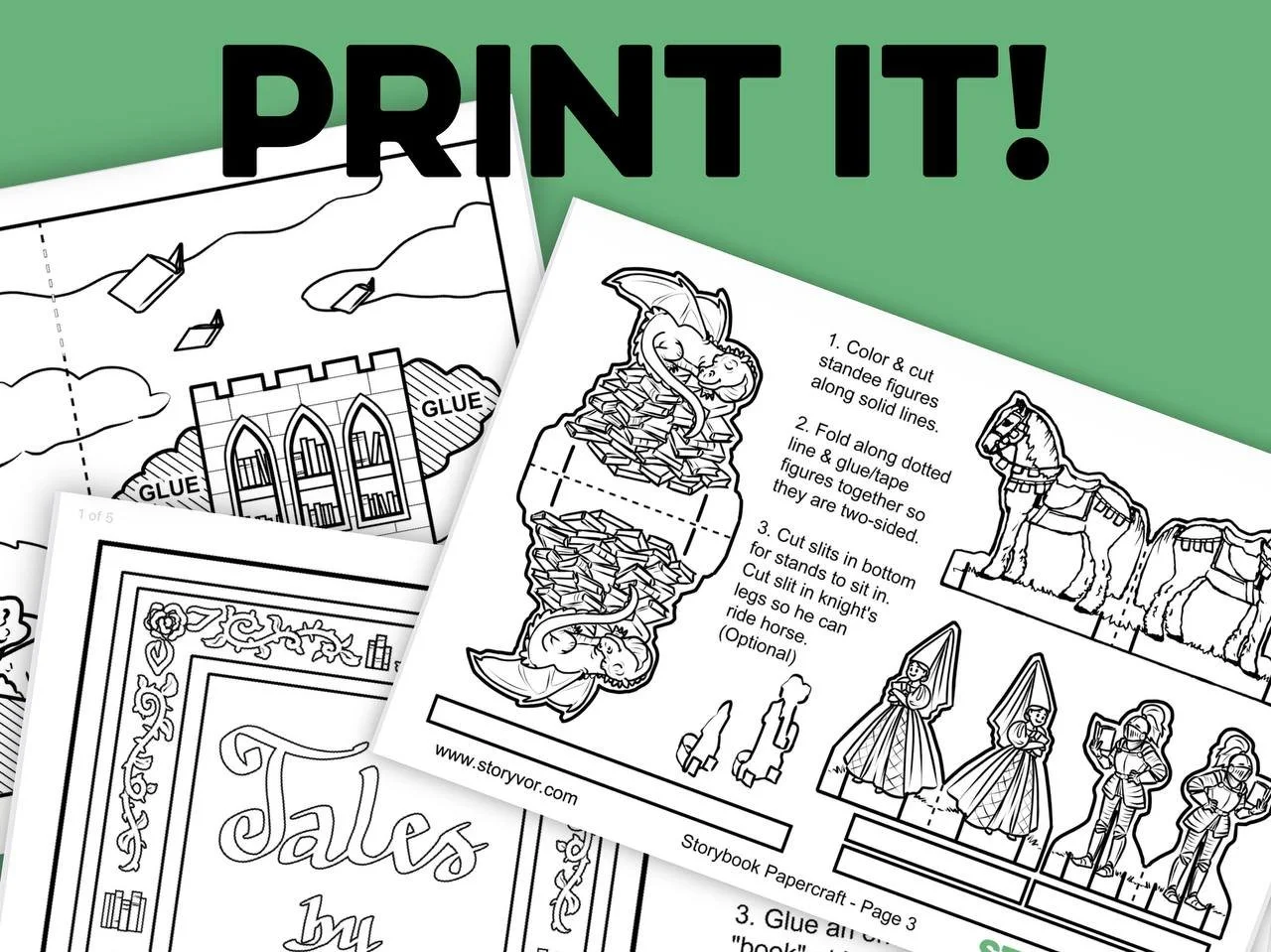
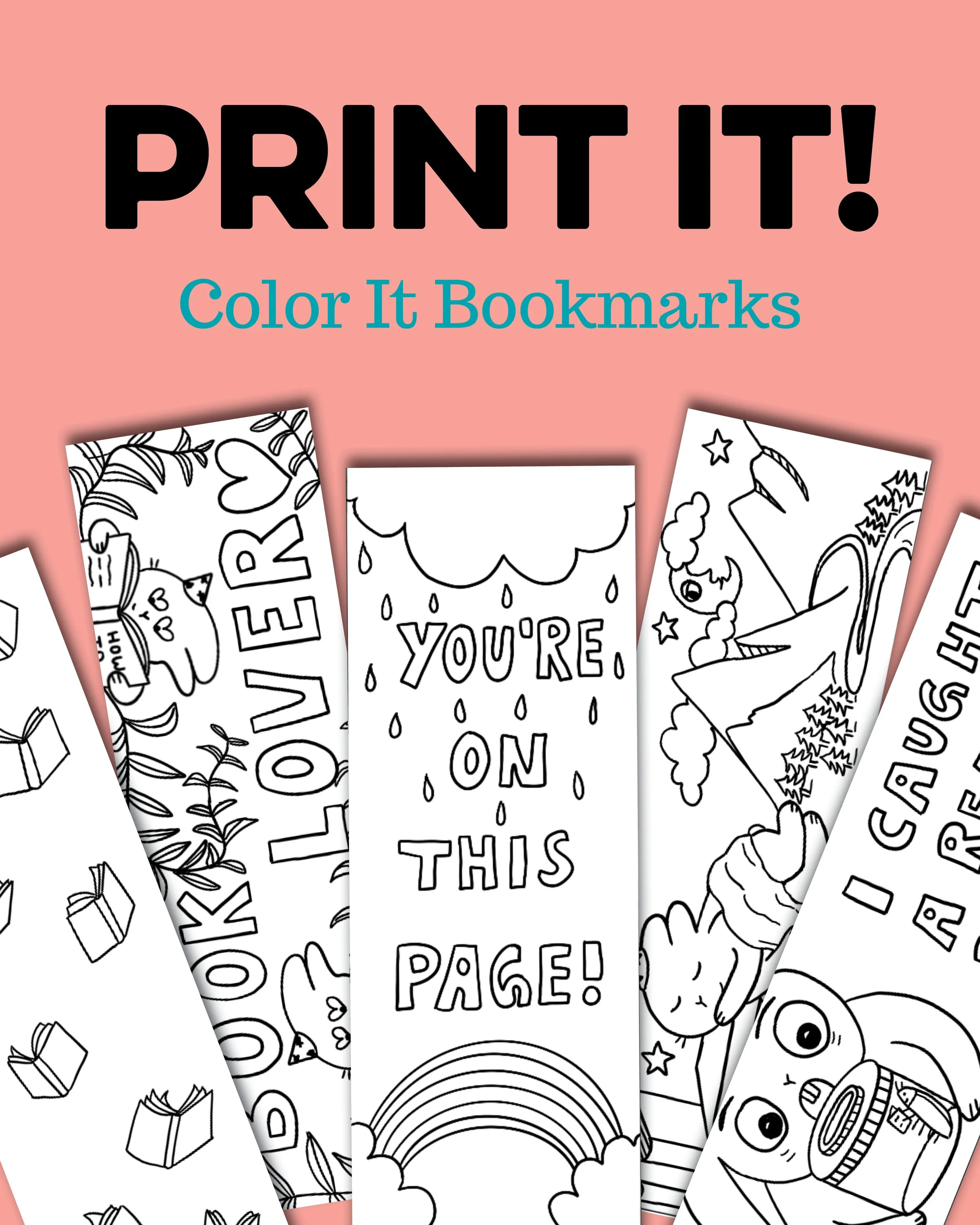


Books are magical things, and so it makes sense that the process of making them can seem mysterious and complicated. But the truth is, anyone can make a book. Not with AI, not digitally, but with your own skills and filled with your own expression. Here’s how.