
Print it! Book Bingo
14 December, 2025 ● Written by Stefan Bachmann
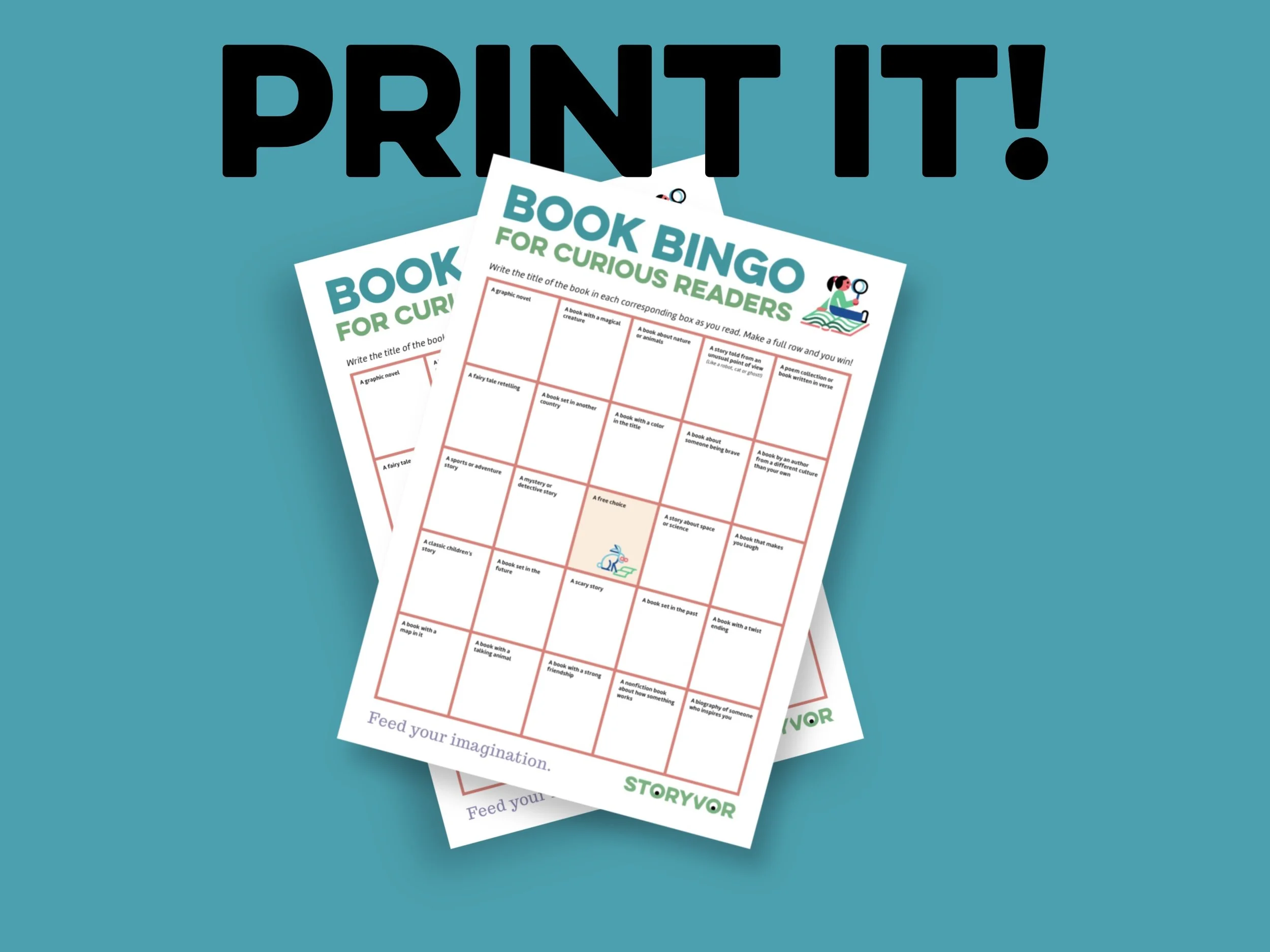
When 16th century peasants played Il Gioco del Lotto d’Italia in Renaissance Italy, few were probably thinking of it as a particularly educational pastime. It was a gambling game, simple, easy, a great way to win a bit of money, and even better way to lose it. By the 18th century, versions of the game were being played in France and Germany throughout all social classes, from the very poor to the aristocracy. Then, sometime in the 19th century, it made the jump to schools: In Germany, a version of the game called “Lotto” or “Tombola” was developed to teach history, math, and even spelling.
From Germany, it made its way across the Atlantic to the United States, where it was originally called “Beano”. According to legend, it was renamed “Bingo” after an enthusiastic winner mispronounced it. It became a fixture in American life, played everywhere from retirement communities and veterans’ halls to community centers, schools, and dedicated bingo halls.
Over time, educators and librarians recognized that bingo’s structure, clear goals, and sense of reward could be applied to literacy learning as well, as it had been over a century before in Europe. Enter the bookish version of bingo, a relatively new, reading-focused adaptation that swaps numbers for genres and themes, and encourages young readers to try out new books and subjects they might otherwise choose to skip.
How Book Bingo works
A reader decides which line on the bingo chart they want to complete. Each row contains five squares, whether vertical, horizontal, or diagonal. Then the fun begins. Readers must try to find a book that fits each square (a book with a color in the title, a biography, etc.), read it, and completed the row, book by book. What happens next is up to the teacher or parent, but we recommend rewarding reading and curiosity with more opportunities for reading and curiosity! Prizes for completing a row can be more books, an expedition of some sort, or something else the student or child finds compelling.
In a classroom setting, Book Bingo can also be used in combination with book reports, group discussions, or other reflection activities. But whether it’s used for teaching or just for fun, the goal remains the same: to read. Read widely. Read voraciously. Explore unfamiliar authors, genres, and ideas.
Enjoy!
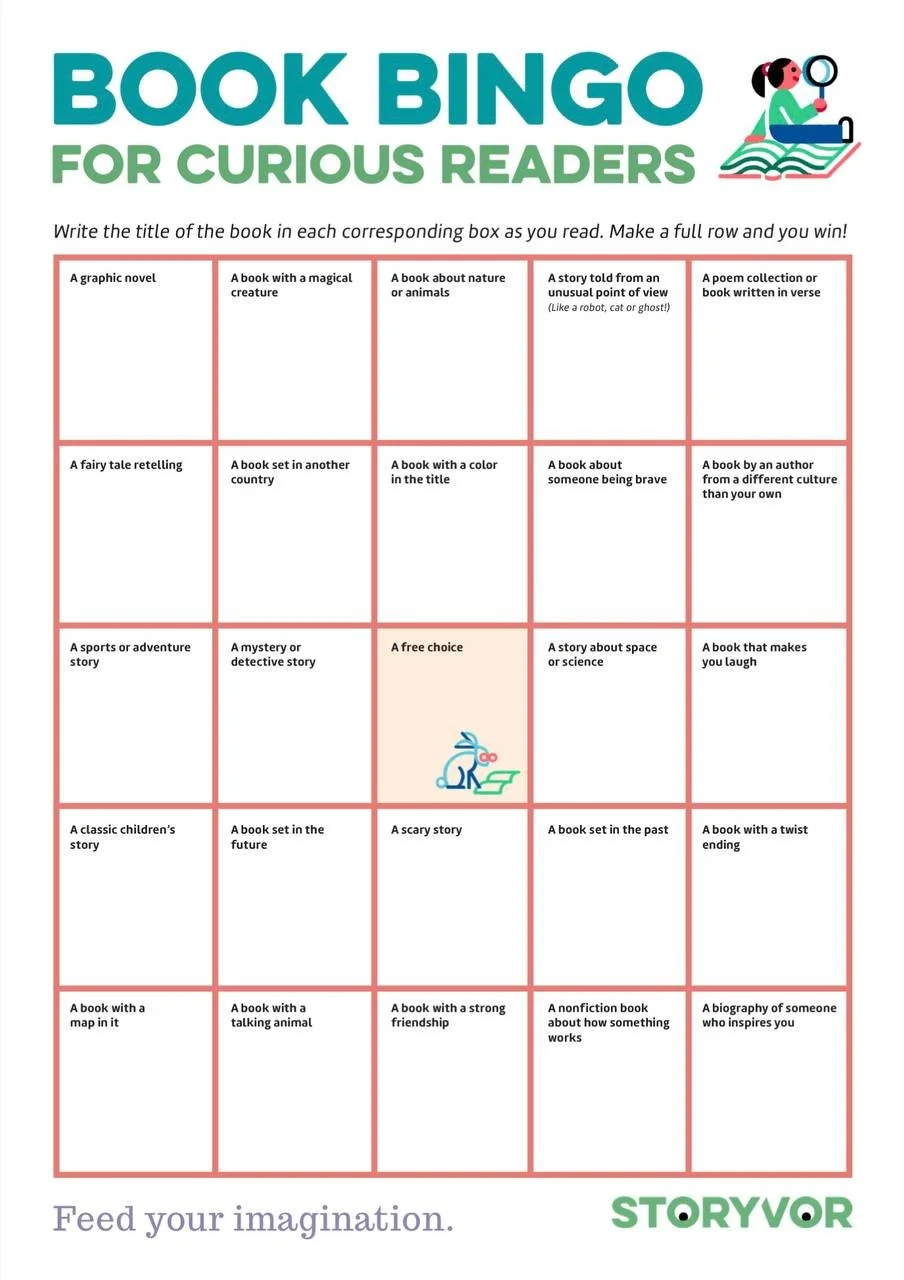
Download your “Book Bingo” print-out here!
Print out our free, handy book bingo page in A4 and use it at home or in the classroom. More details on the research-based benefits of reading can be found here.
How to use Storyvor’s “Book Bingo” print-outs
Print out as few or as many pages as you need for your family or classroom.
Encourage participants to pick a row to complete.
Go on a trip to the library, bookstore, or little free library in your neighborhood, if available. Turn searching for the books into its own small adventure.
Encourage your children or students to complete their row in a certain amount of time. Say, over spring break, or within the days between Christmas and New Years.
Optional: Offer some sort of reward for completing a row. It can be small — a sparkly pen, a cookie, a gold star — or slightly more elaborate and active, like a trip to the bookstore or a museum.
Sometimes games, deadlines, and promises of reward push young readers to complete books quickly but with less focus on retaining information. If you’d like a little more oversight over the reading process, we recommend our easy book reports, which can be filled out for every book completed and add to the accountability and teaching benefits.
Note: If you’d like to collaborate with us or get your own co-branded materials for encouraging literacy at your school, organization, or institution, reach out! We’re happy to work with you to inspire reading in your community, always free of charge, so don’t hesitate to get in touch.

Stefan Bachmann
Editorial Director
Stefan Bachmann has worked widely in education, cultural programming, and literacy advocacy for over fifteen years. He is an internationally bestselling author of children’s books, co-founder of Foundations in Literacy, co-president of AUTILLUS, the Swiss Association of Children’s Authors and Illustrators, as well as a member of various advisory boards and committees in Switzerland and abroad. He studied composition and theory at the Zürich University of Arts.
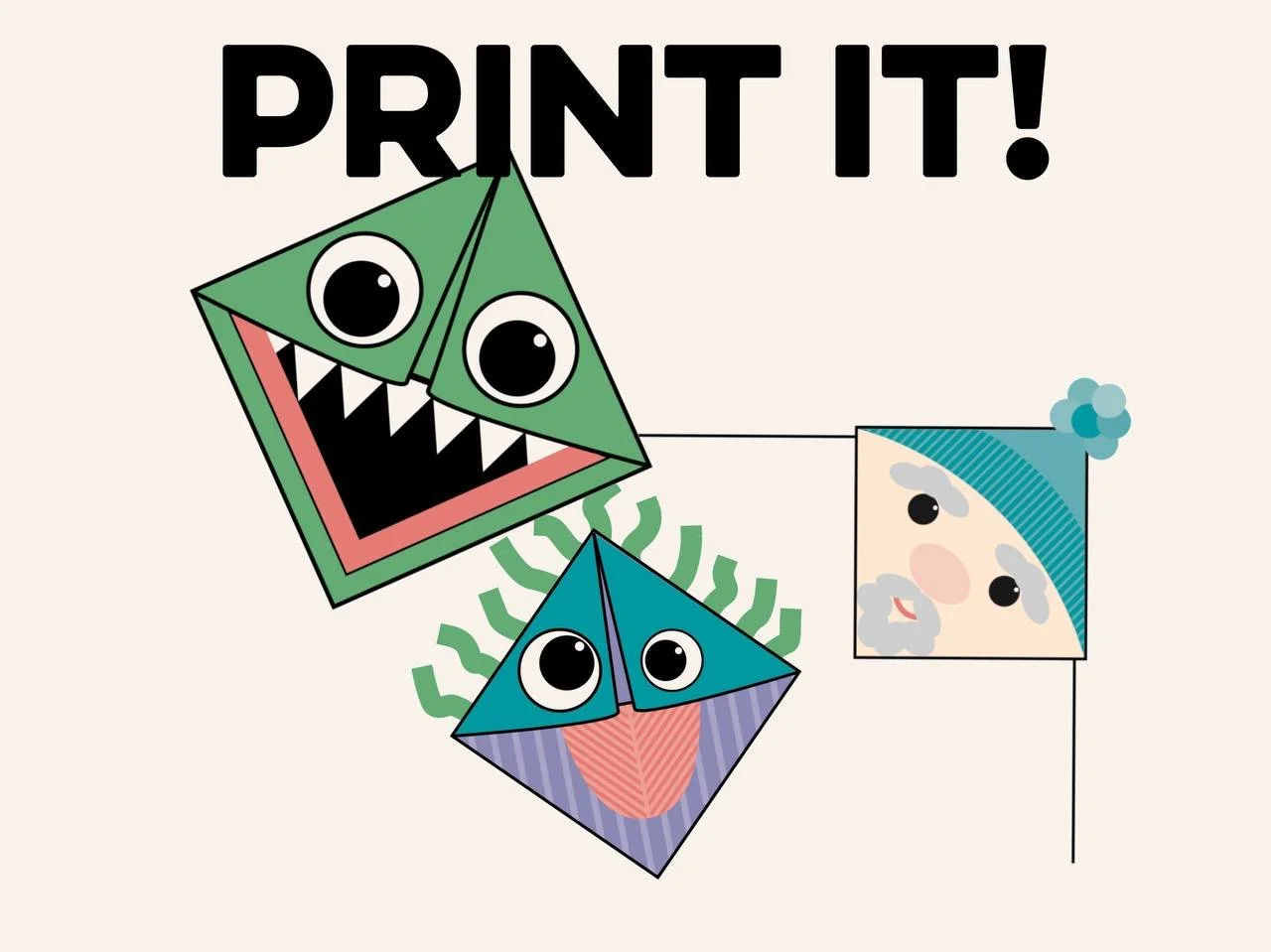

Sarah Y.'s illustrated, printable play-set turns a few sheets of paper into a castle, a river, a dragon, and a story. Use it in class for crafting time, storytime, and world-building.