
Make Believe: On Telling Stories to Children
Mac Barnett
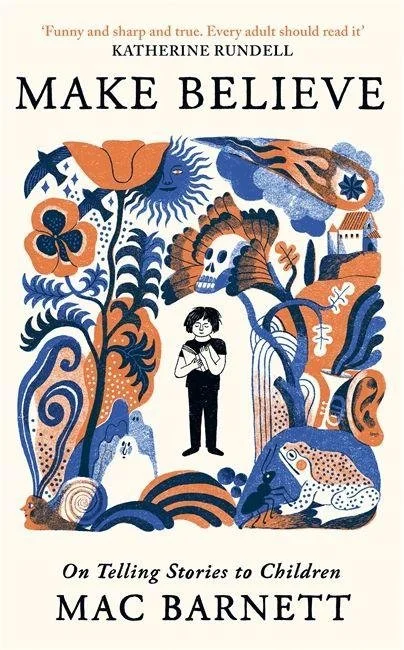
Verdict:
For parents, teachers, and anyone working to encourage literacy in young people, an essential and inspiring resource.
Unlike most of our reviews, this is a book for adults: for parents, teachers, authors, illustrators, librarians, and grandparents who buy books for their grandchildren. Mr. Barnett’s message is simple: children need good stories. The rest of the book explains what he means by “good,” in a way that is inspiring and educational for anyone looking to encourage literacy in children.
We start from the premise that reading itself is something that every child needs, for all the reasons STORYVOR continues to lay out in our articles and essays. But not just any reading. Mr. Barnett is not talking about good morals or messages, nor about fine paper, handsome bindings, and collector’s editions (though all of these are lovely to have), nor about prize winners, five-star reviews, or bestsellers. In this succinct, compact volume, he means books that children like: books that fire their imagination, that give them room to think and ponder, and that treat them as people who deserve quality.
What Children Don’t Need? Frantically Positive, Painfully Zippy
He contrasts these “good” books with books that are not good: books with vague messages of “be nice”; books in which nothing happens; books with insipid writing that has no rhythm, structure, or pull; books with heavy-handed moralizing and just enough story to carry the moral; books that ignore a child’s world, perspective, and reality; books that metaphorically pat a child on the head and say, “Try to stay out of trouble and maybe you will grow up one day.” He also means books that try so hard to appeal to children that they end up off-putting even to their target audience: too loud, too random, too garish, with fonts and pictures scrambling across the pages, clumsy sing-song rhymes, and stories that say nothing a child wants to hear. Books children do not need are, as he puts it, “frantically positive, aggressively uplifting, painfully zippy, with nothing to say.”
Children are People, Their Stories are Training Grounds
His central point is that children are real people, with real likes and dislikes and a capacity for imagination far greater than most adults’. Children use stories to learn about the world, though not in dry academic terms. Through stories they find the magic, wonder, joy, and pathos of life, while the characters show them how to navigate the big experiences and emotions of their own lives, just as the heroes do. A story is not just a story. It is, to young readers, a place children step into, finding treasures to carry back into their own world. Children do not have the hard walls adults build between the physical world and the world of make-believe. For them, both are real, and stories are the training ground for the world they are growing into. Children are fully capable of catching humor, noticing details, asking profound questions, pondering deeply, and grappling with great human dilemmas that have no answers. Stories let them do much of this safely, in their minds, without having to live it.
Mr. Barnett acknowledges that even poor-quality children’s books can sometimes be amusing, just as adults often read less-than-stellar literature. But like other less-than-stellar elements in our lives, such books should be the exception rather than the rule. Good stories should fill children’s minds, because those stories go on to shape their characters.
He also advises adults not to push more grown-up books on children at the expense of much-loved favorites from their early years. Those first favorites should be treasured and reread, not abandoned simply because a child can now manage more words on a page.
A Case for the Future
On a couple of points we would quibble with the author, or at least rephrase his advice. He writes: “Champions of kids’ books should also be wary of sunny appeals to futurity: ‘We are making life-long readers! Shaping future leaders...’ But the children’s writer – and anyone who gives books to children – would do better to think about children in the present.... They deserve entertaining stories and meaningful art...” (p. 10).
We agree with his conclusion but must qualify his starting point. At a time when children are reading less and less, with disastrous consequences for their minds and society as whole, we believe we need to be very conscious of the future, and raise awareness to the purpose of reading, not through guilt-tripping or shaming parents and overworked teachers, but by naming the importance of literacy, encouraging its practical uses, and advocating for accessibility. Appeals to futurity are exactly what we need, perhaps not with children, who shouldn’t worry about these things, but with society, educators, and lawmakers. However, we wholeheartedly agree that meaningful art, in literature, illustration, poetry, and music, is a high priority for everyone, especially children.
STORYVOR uses affiliate links. When you make a purchase through our buy links, you directly support our mission to spread literacy at no extra cost to you, and help keep free teaching and book resources available to parents and educators around the world.


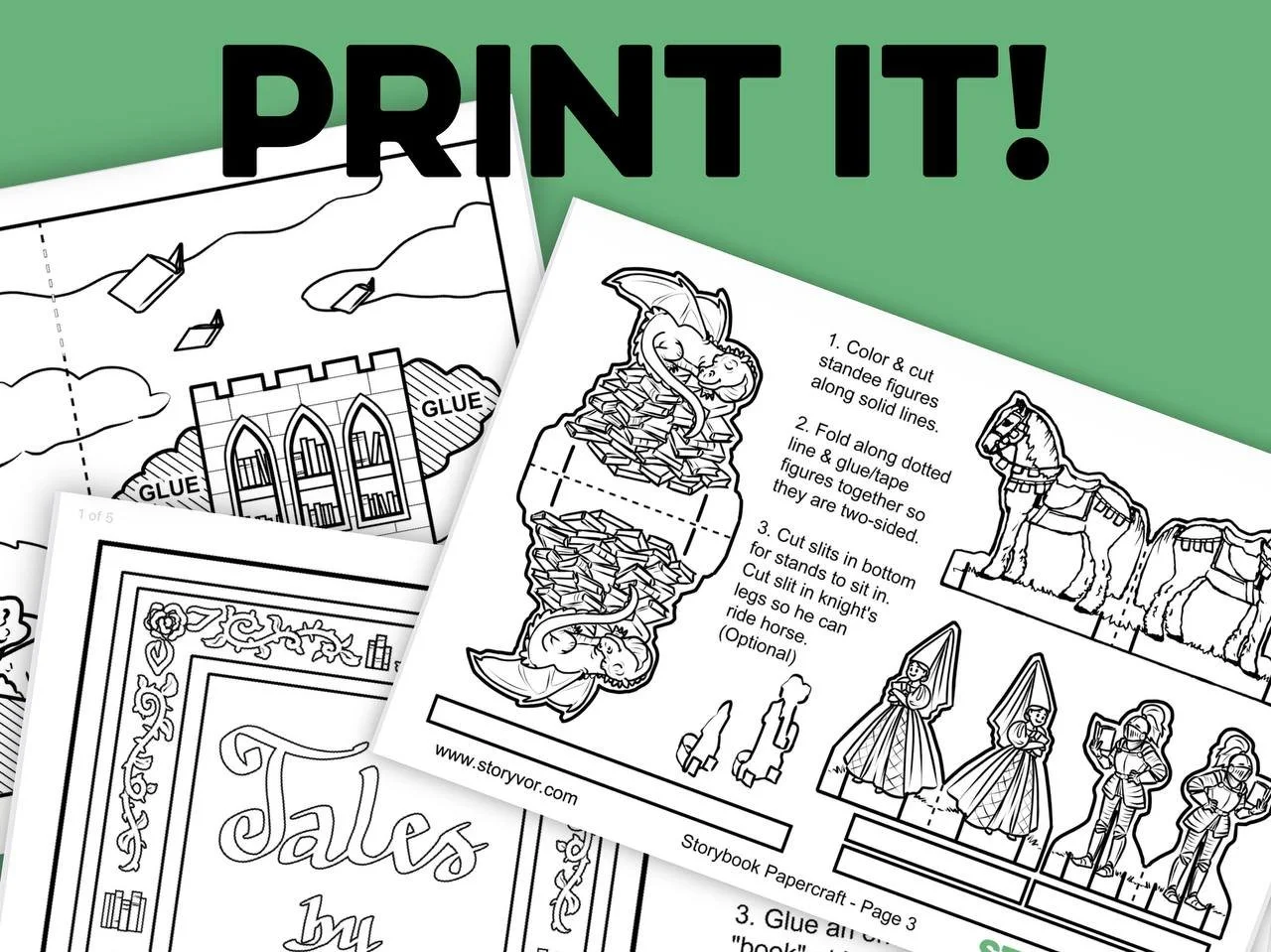

Books are magical things, and so it makes sense that the process of making them can seem mysterious and complicated. But the truth is, anyone can make a book. Not with AI, not digitally, but with your own skills and filled with your own expression. Here’s how.