
How to Make a Zine
Fold, snip, draw, color, and give your inner storyteller a voice. Lisa Adib writes on her experiences as a zine-maker and offers readers a practical guide to making their very own.
18 December, 2025 ● Written by Lisa Adib
Illustrations throughout by Lisa Adib
I first heard about zines a few years ago and was hooked immediately. I started making them about little snippets of my life, or things in the world that concerned or excited me. I would print them on low-quality paper and distribute them amongst friends and family: as little tokens of an activity we did, to share what I was dealing with, or just because. Sometimes, I would spend hours hunched over my desk trying to express what I was feeling and distill it into those few pages. And when I finally finished my work, holding the result in my hands, its paper still sticky with glue, I would feel a wave of accomplishment wash over me. I’d done it. I’d drawn, written, pieced together my thoughts and feelings, and put them out into the world.

The History of Zines
Now you might be wondering, what the heck is she talking about? What even is a zine? Pronounced “zeen”, it’s short for magazine – a self-published, handmade booklet. Often called a fanzine, it can cover any niche topic. Alison Piepmeier, the author of Girl Zines, likens zines to writing a blog on paper, copying it, and giving it to others. Zines gained popularity in the ‘70s, when copy shops made production and distribution cheap and easy. The punk movement adopted zines, using them to exchange information about alternative culture, spread feminist ideas and anti-establishment views, and carry them into popular culture. In the 90s, during the third wave of feminism, they were still used to circulate feminist theory. For example, riot grrrl zines got women speaking up against sexism and built solidarity.
History shows that zines create space for intellectual discourse beyond the mainstream. With merely some paper, ink, and old magazines, they formed a space where people who rarely saw their experiences or identities reflected could express themselves. Recently, they’ve resurged, partly as a protest against heavy internet usage (zines are real, tangible, crafty) and partly as a response to consumerism and individualism. Zines also foster civic engagement and critical thinking, letting readers represent themselves through mixed media and text. Increasingly, zine pedagogy is used in classrooms to support students through self-initiated and participatory practice.
When thinking about my own school days, I realise now we were always making zines. We just didn’t call them that. My friends and I put together little booklets with made-up news and ads, stapled pages of silly (or maybe not so silly) thoughts and stories. Our heads were filled to the brim with ideas, and we wanted to get them out, pass them around, swap and trade them. I’m not sure when we stopped. Maybe when assignments kicked in and we had to write “proper” stories, analyse Goethe, or find all the alliterations in the poems given to us. I’m not saying we should ditch everything else and only teach kids to make zines. But I do think zine-making is a powerful way – for little and big humans – to turn their experiences and perspectives into physical objects, and share those perspectives in the classroom and beyond.
What are the benefits of zine-making?
Zines can turn a spark of curiosity into something tangible and shareable. Their biggest gift is the freedom they provide. Students can write about anything, in any style. By doing so, they can express their experiences and perspectives without being confined by expectations. For children who feel “othered”, zines form a vital safe space to express identities, connect with peers, and find communities around shared interests. But zine making can also build and improve academic skills. Handwriting, drawing, developing a plot or deciding on page order can strengthen fine-motor control, cognitive development, and narrative thinking.
Research suggests that the tactile aspects of zine-making matter: Ibaibarriaga et al. (2025) investigated how writing with a pen vs. typing on a computer influences word acquisition and therefore literacy. They divided 50 preschoolers into two groups, one studied new words by typing them, the other group by handwriting. Then the children were assessed based on their abilities to identify the learned words. Preschoolers who practiced writing with a pen acquired words more accurately than preschoolers who typed, showing that crafting and using pen and paper can support early literacy and alphabetic skills.
Furthermore, zines expose students to non-traditional publishing and media literacy while simultaneously being low-cost and accessible for every learner. Because of that they can also be considered a great alternative to passive, screen-based consumption and can invite students to create or consume with intention. They can spread political ideas and carry stories, which gives students a sense of agency as well as an interested audience. Crucially, anyone can participate, as zines meet students where they are, at any literacy level, in any language, and with any set of interests. Zines let students experience the power of a self-written text. Other storytelling practices can also be great, anything that invites us to look beyond the horizon. That’s why I believe telling stories through zines or other media is not only essential to becoming literate but also a fundamental part of being human.
The real beauty of zines is their simplicity. Not much is needed to create one but anything can be used. Magazine clippings, stickers, pressed flowers. Messy or neat, monochrome or neon, fold, glue, staple or stitch. Some artists even use unconventional materials like safety pins or earrings to bind their zines. It all counts! Low-cost materials mean high participation rates which is why zines can do so well in the classroom or at home. If the endless possibilities feel a bit daunting, start with our one-page fold instructions, collect some ideas, and start the process. In just a few minutes, students can move from blank paper to a concept to a finished booklet. And suddenly, they’ve made and published their first zine.
How to make a zine
Plan it out
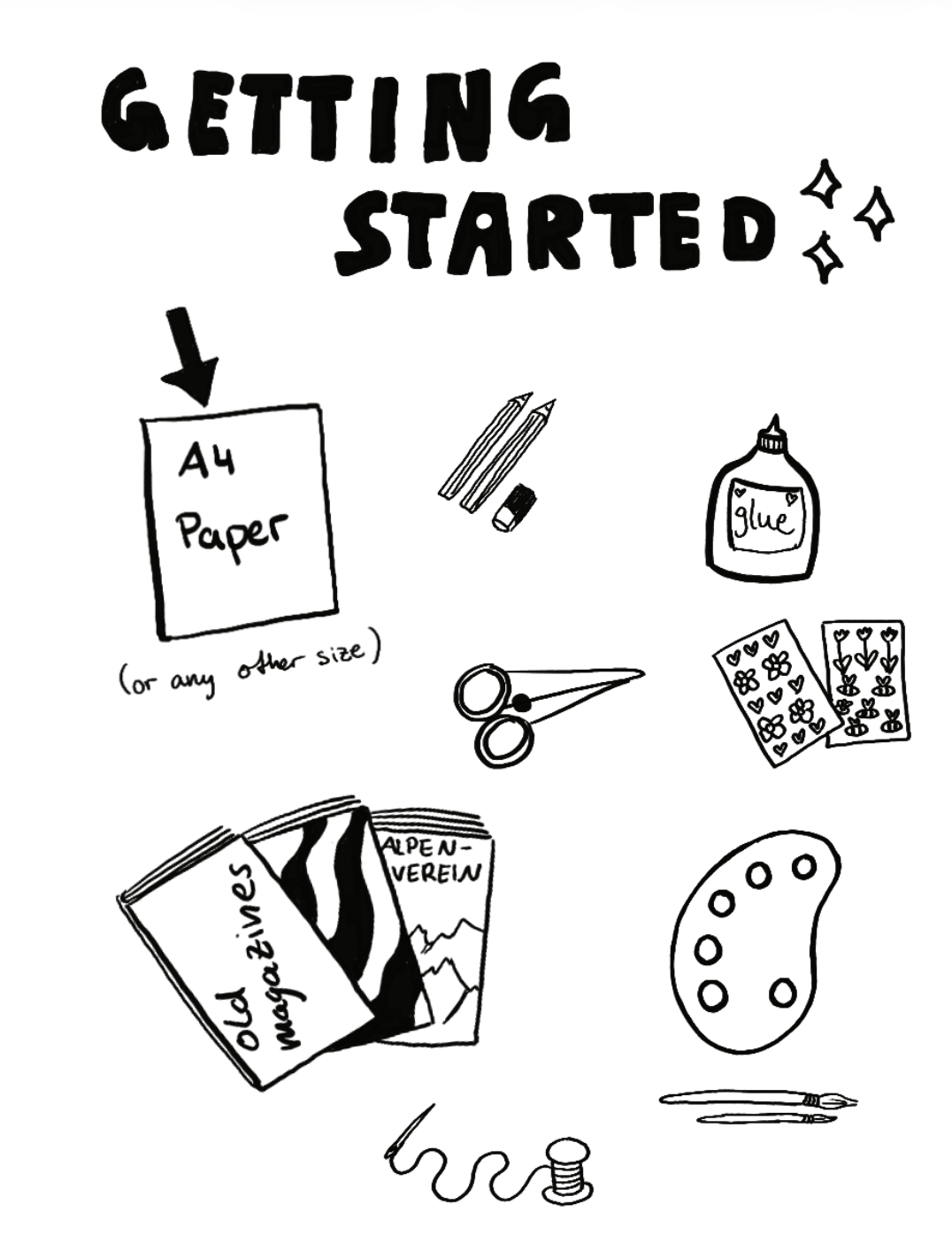
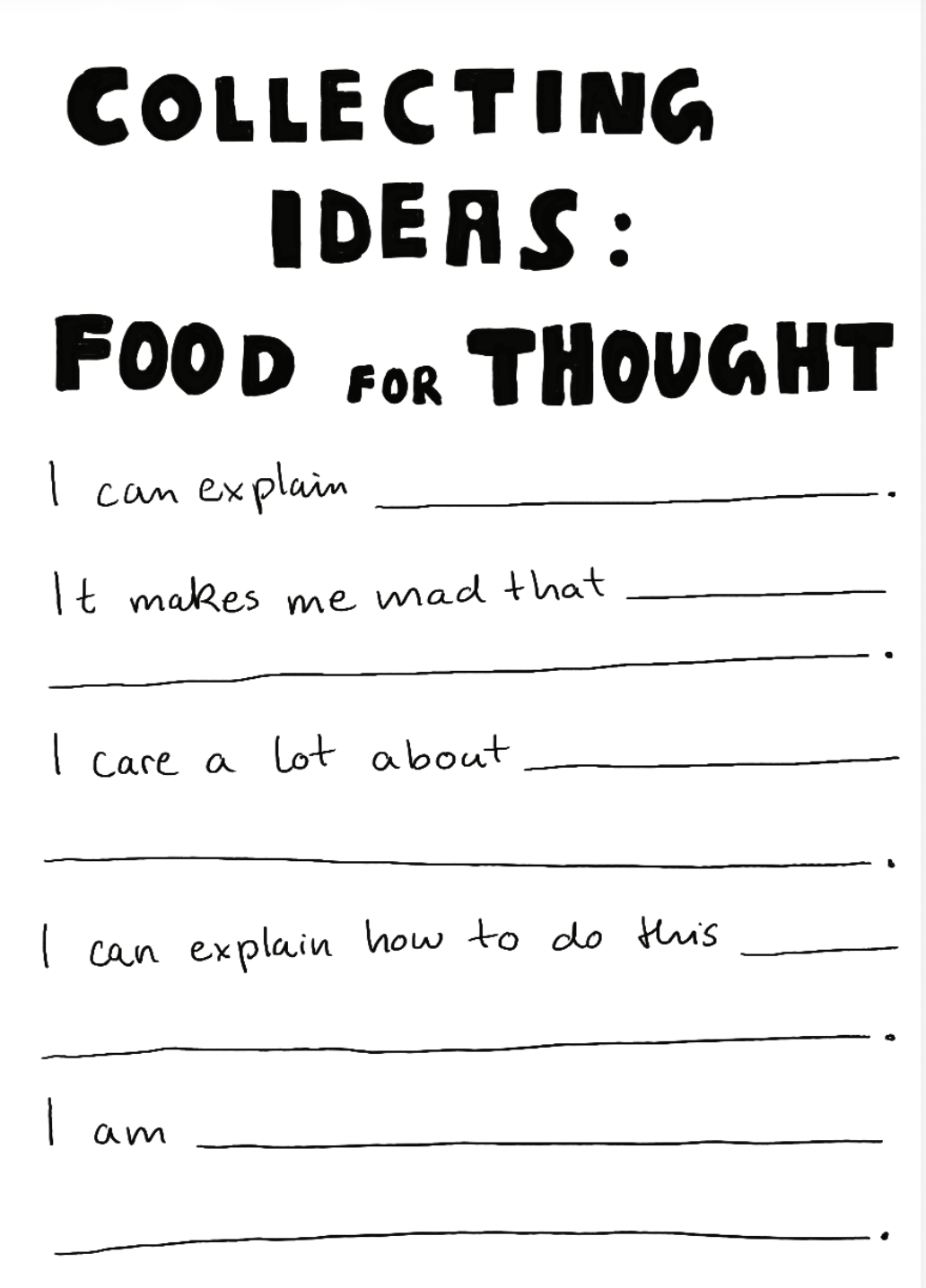
Gather your crafting materials: Paper, scissors, glue, stickers, fun old magazines, paintbrushes, really anything you like. The sky’s the limit. Then decide what you’d like the theme of your zine to be. Try filling out our questionnaire to gather ideas. Once you’ve decided on a theme, try planning what each page will have on it.
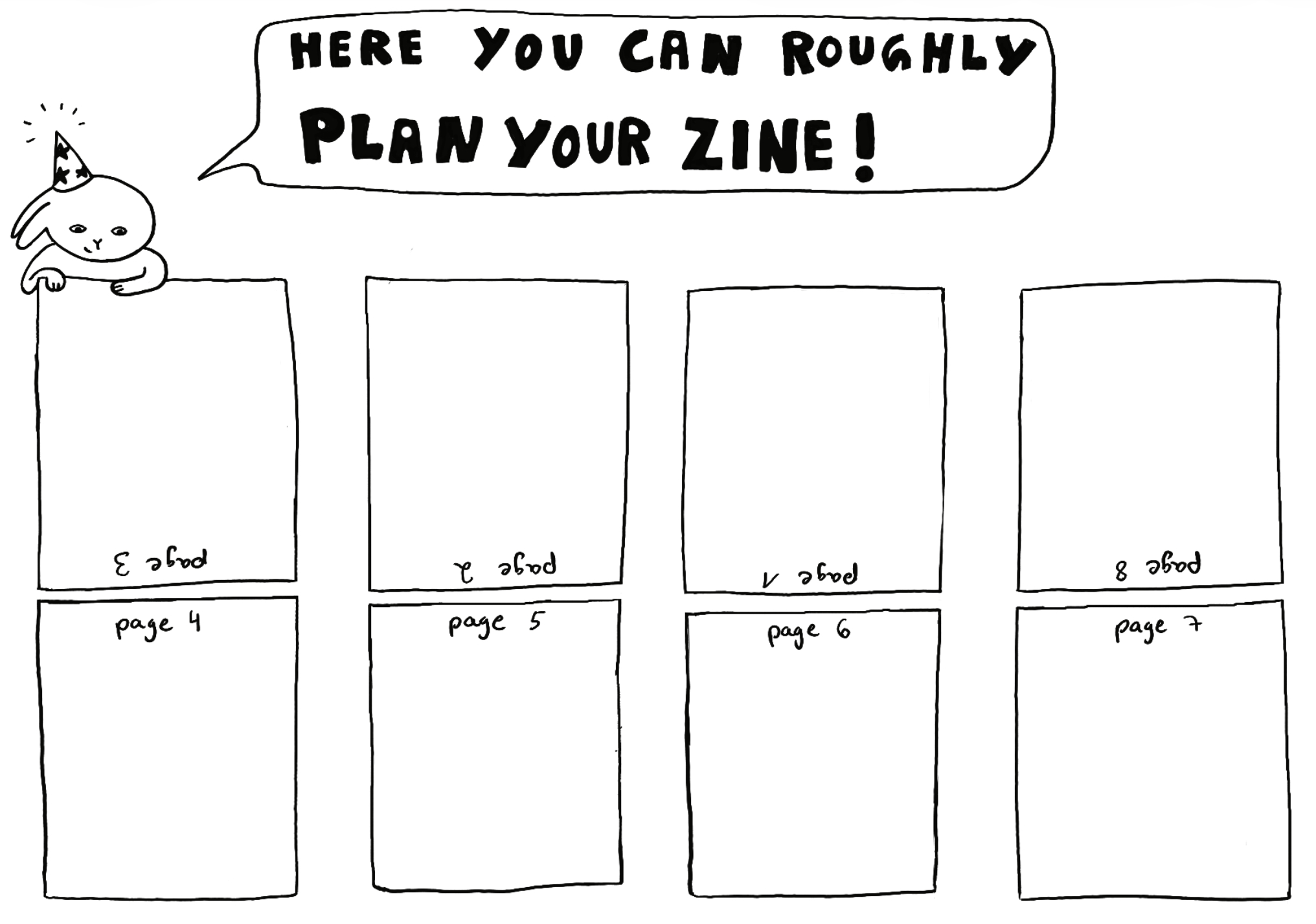
Here you see how your A4 page is divided and where all the contents will be once folded. It takes some critical thinking to understand the sequence of pages and put everything in the right spot, but that’s part of the fun!
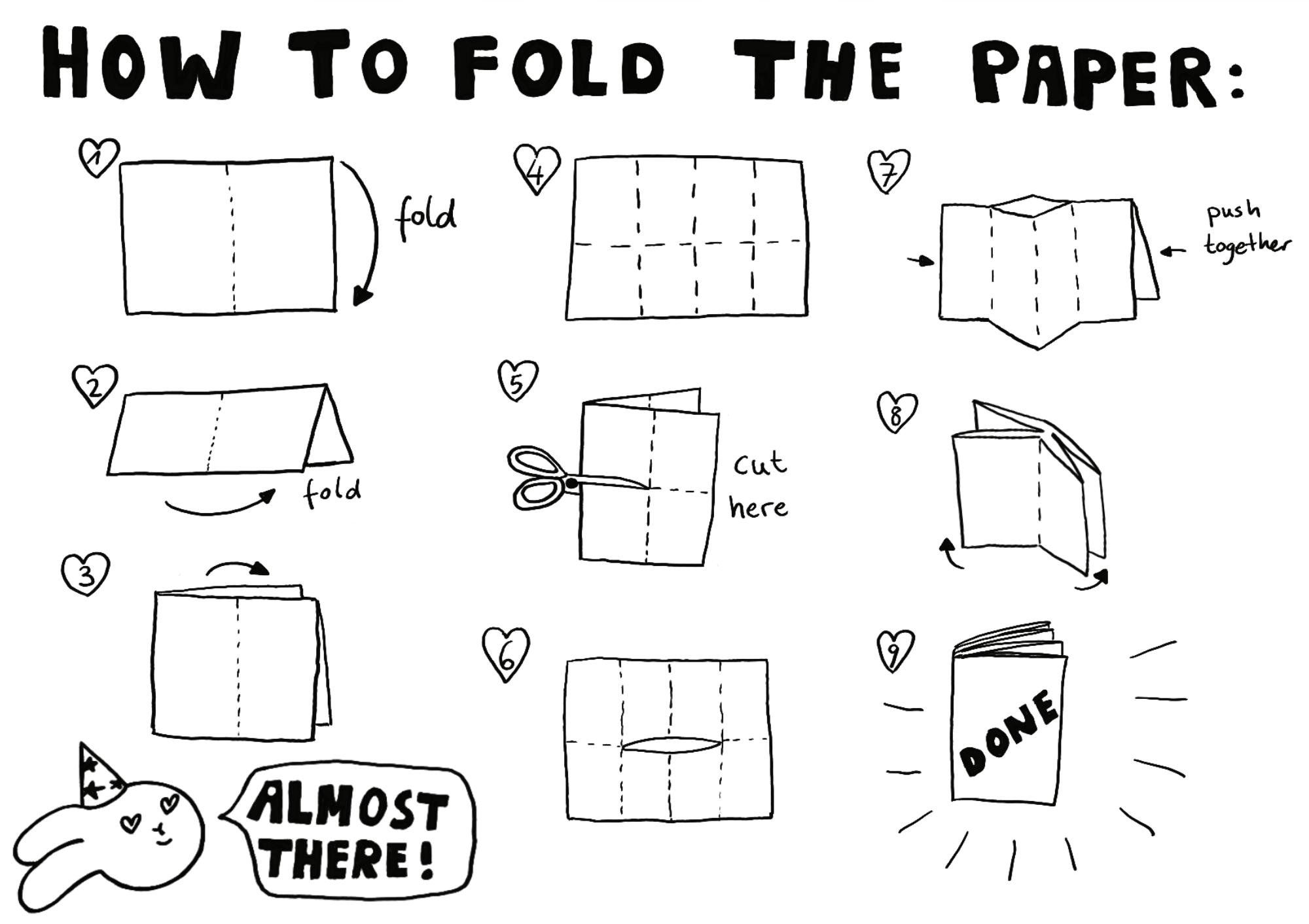
2. Start folding
Here’s where it gets a bit tricky. Once you’ve decided on your theme, planned out the pages, and decided where everything’s going to go, start folding.
3. Fine-tune the pages
You’ve got everything ready. Now the fun part: fill the pages of your zine with stickers, messages, poems, a story, a comic, useful tips, or anything you like. If you want, you can also add more and more eight-pagers by sewing together the spines. And don’t forget a great cover that will catch readers eyes and make them want to dive in!
Download the “How to Make a Zine” Guide
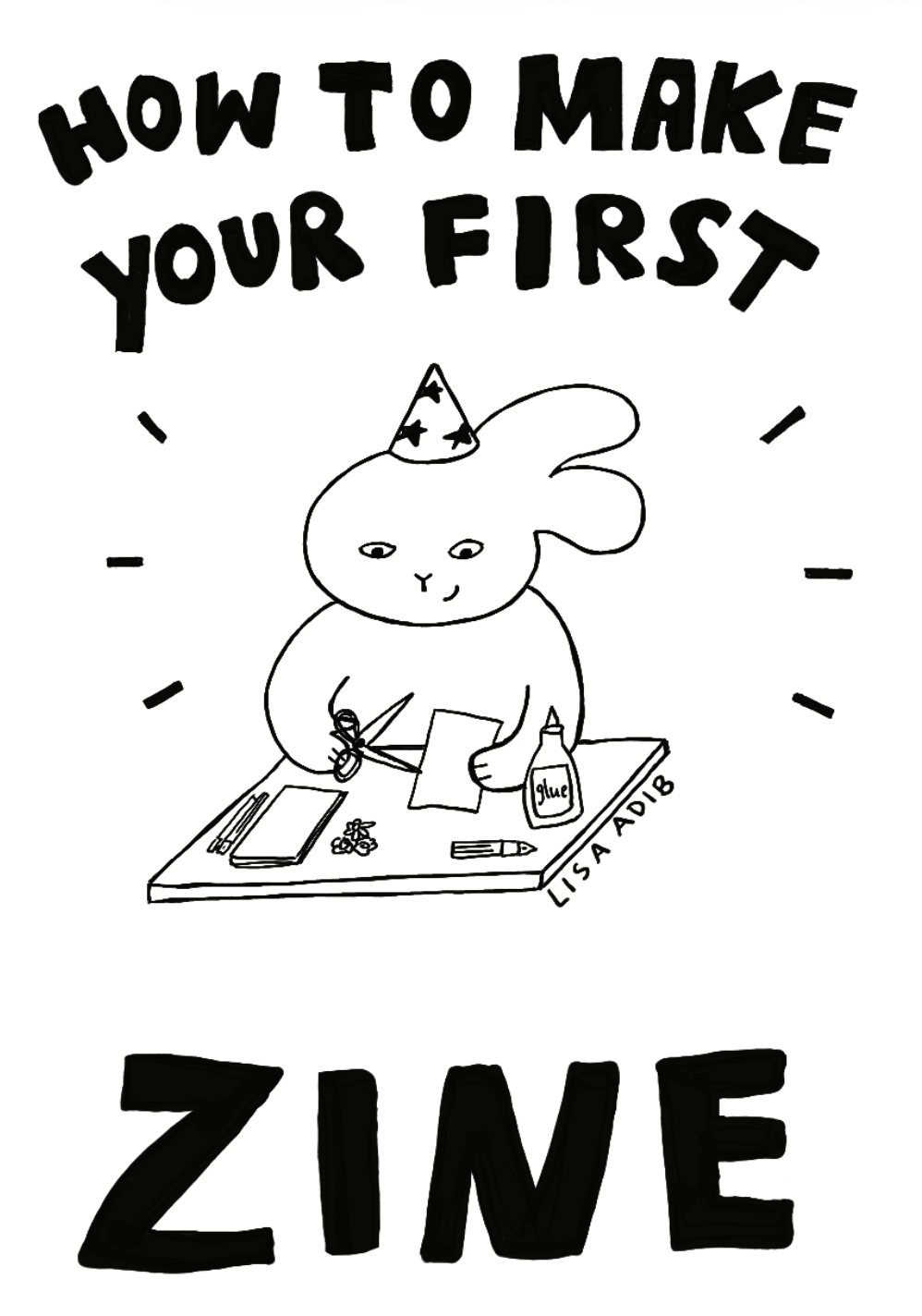
The above images on how to make a zine can be made into their own zine! By printing out the free download here, parents and teachers can make a practice zine, or give it to their children and students to make before diving into making their own from scratch. It’s a zine guide in zine form.
Further reading
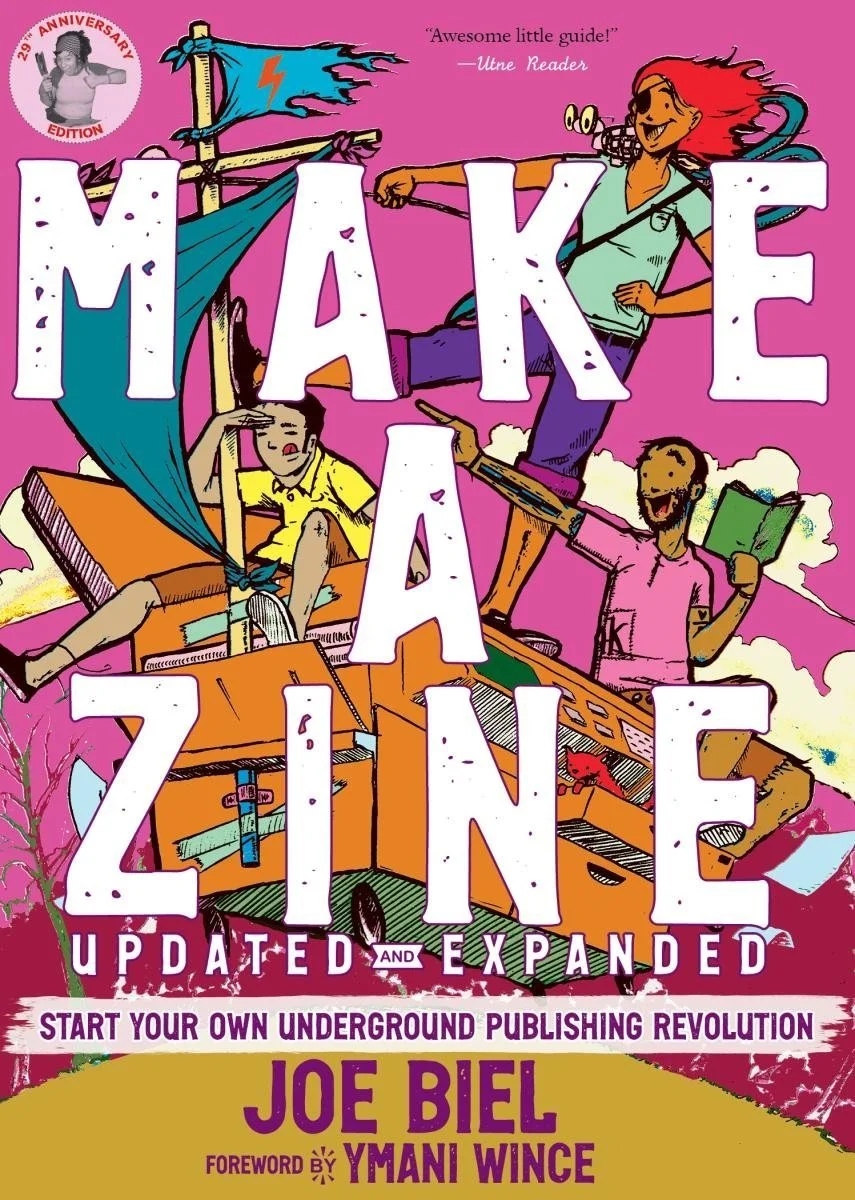
Make a Zine
Joe Biel
In this new edition of Microcosm's popular DIY guide to zine-making, Joe Biel updates the information provided in the first edition (edited by Biel and the late and great Bill Brent) to address zine making in today's digital and social-media-obsessed world.
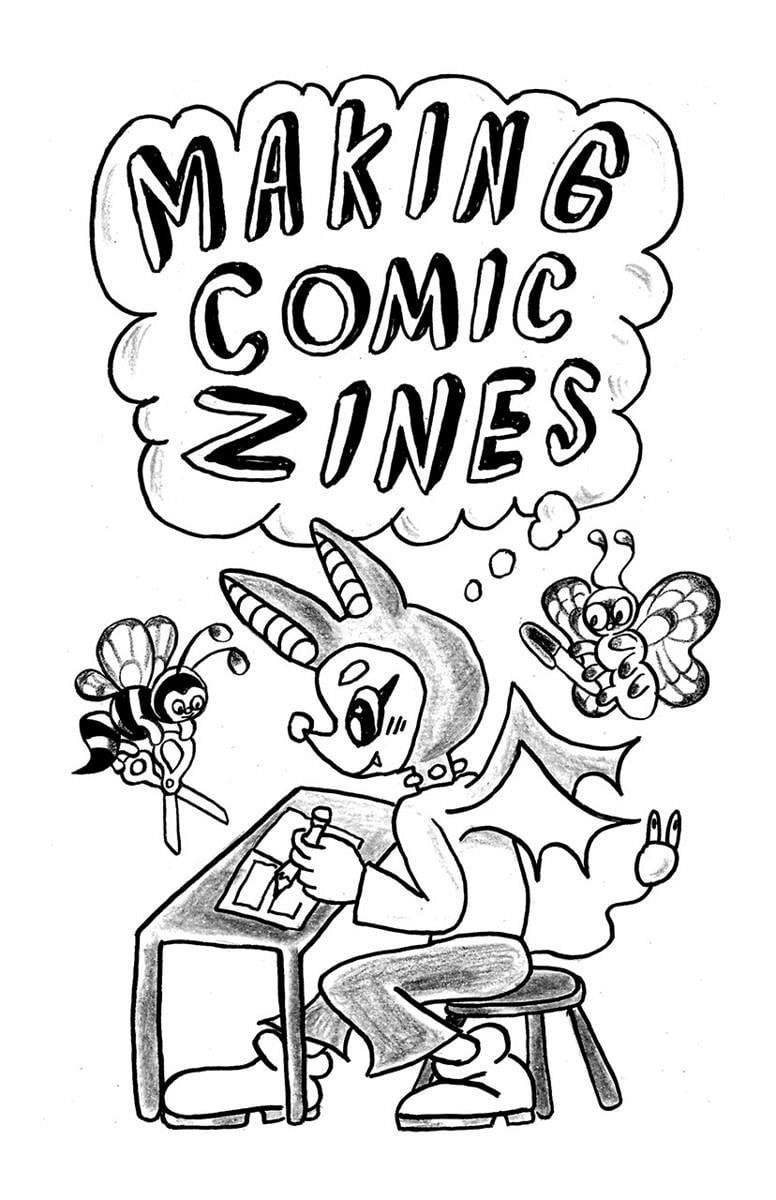
Making Comic Zines
Eddy Atoms
Appropriate for kids to adults, this guide shows you the basic steps for creating your very own comic, from brainstorming and character design to layouts and production. Grab some paper, some pens, a stapler, and have fun!

Lisa Adib
Contributor
Lisa Adib is a workshop leader and literacy advocate from Düsseldorf, Germany. Currently, she is pursuing her Master of Science in Vienna, Austria, researching social inclusion in urban gardens. She is passionate about environmental education and cares deeply for nature and all its inhabitants. In her free time, she creates zines about her life, reads anything she can get her hands on, and spends time outdoors. Her favourite animal? Bunnies, of course!

Sarah Y.'s illustrated, printable play-set turns a few sheets of paper into a castle, a river, a dragon, and a story. Use it in class for crafting time, storytime, and world-building.