
How Scary Stories Help: The Enduring Importance of Spooky Children’s Literature
10 October, 2025 ● Written by Stefan Bachmann
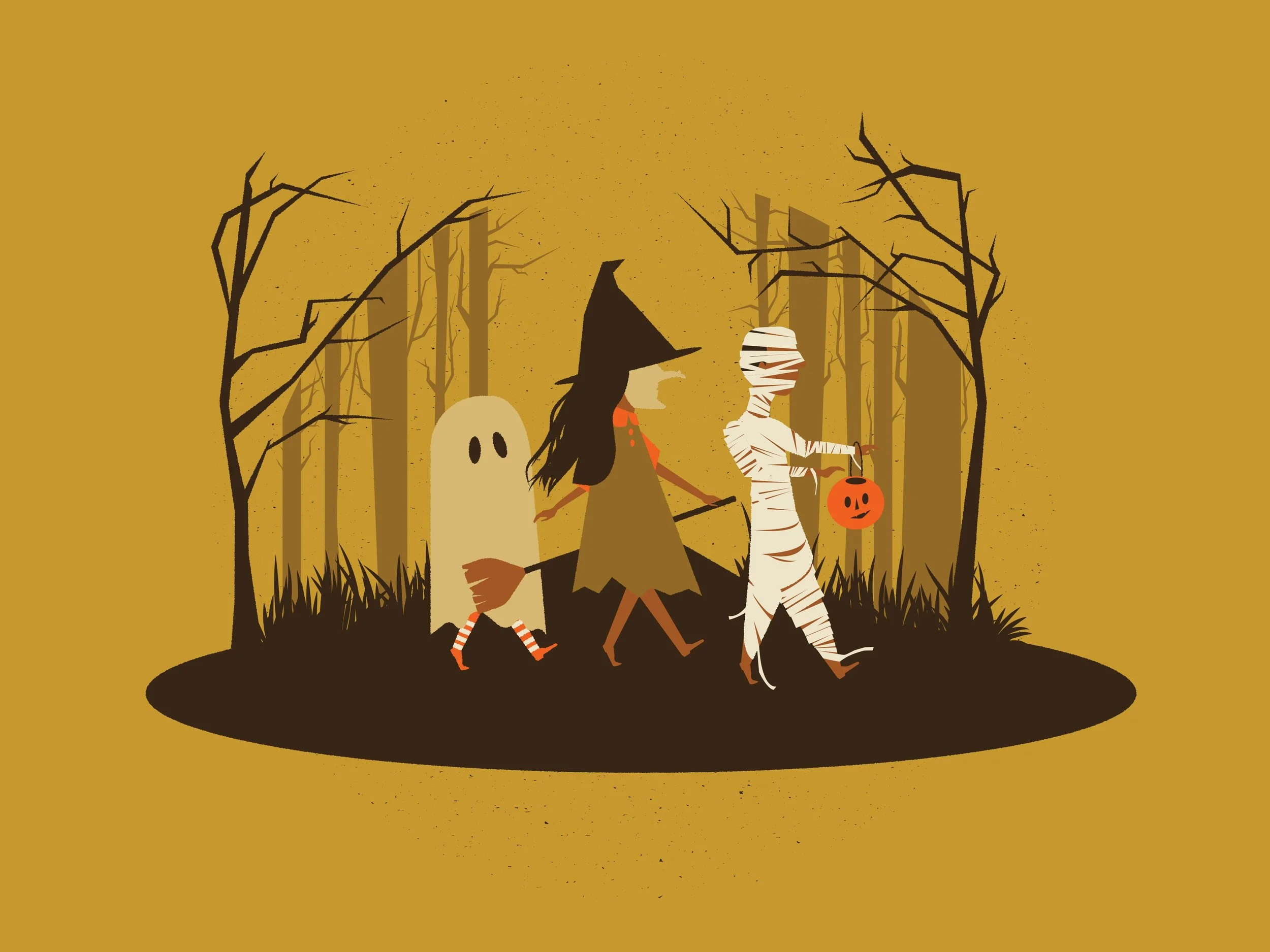
Illustration by Stacey Knipe via Unsplash
Fall is here, and suddenly, shop windows are swathed in spider webs, skeletons crawl across otherwise well-tended lawns, grocery store shelves overflow with sugary vampire fangs and those individually packaged, gummy eyeballs . . . and the books! Oh, the books. Since August, bookshops have been rolling out their Halloween offerings, tables and end-caps brimming with tingly tales of ghosts, monsters, and all things uncanny.
Some parents love it. Others shake their heads. What could possibly be the point of reading things that frighten you? Isn’t horror just violence? What if my children or students are sensitive?
These are all valid questions, and we’re here to answer some of them and to put in a good word for the benefits of spookiness. Why is it such an indelible part of literature and storytelling? Why, as a parent, could it be not only ok but greatly beneficial to read a scary book aloud to your child? Read on to find out.
Why humans are drawn to scary stories
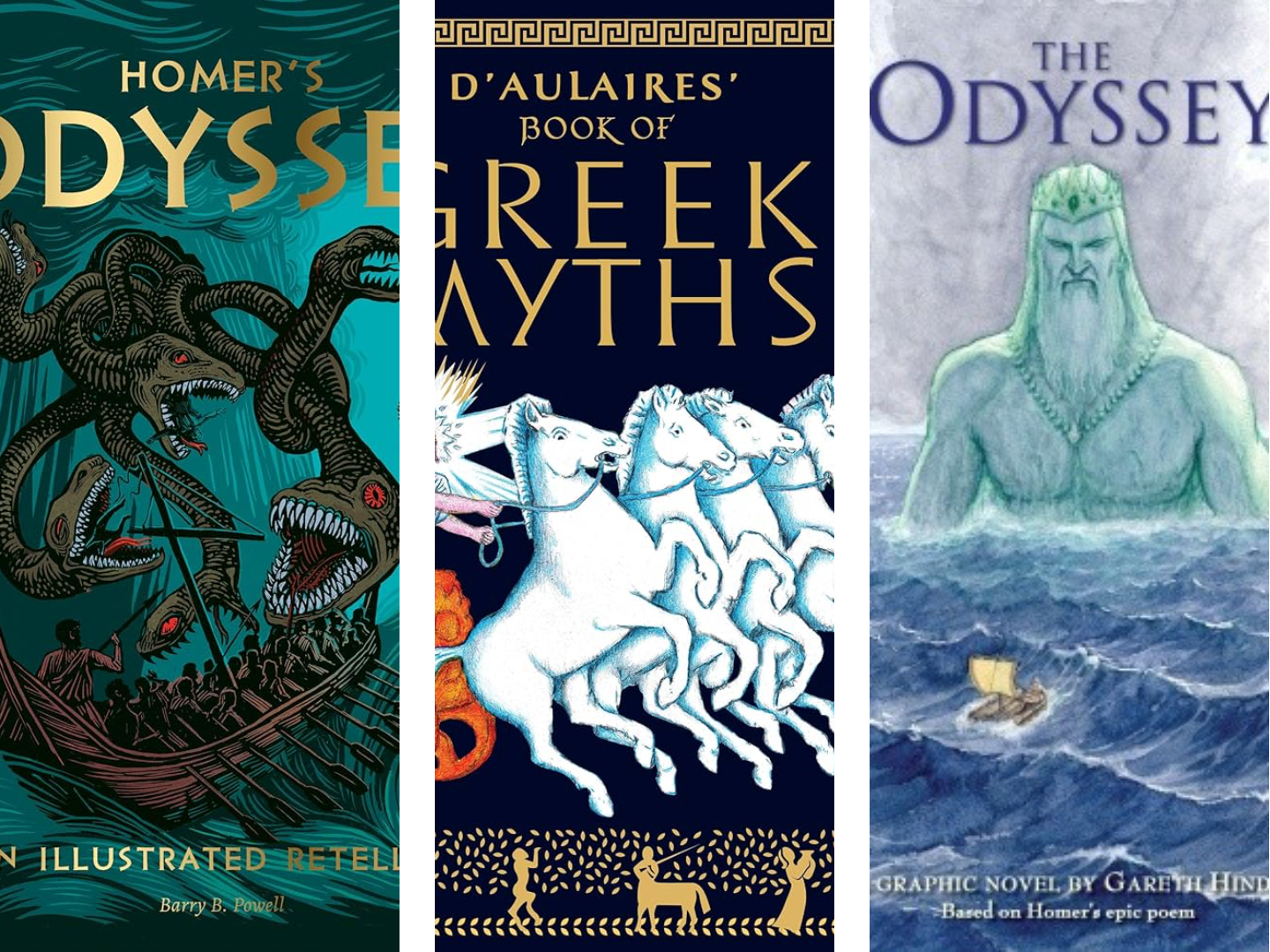
Some of humanity’s first recorded stories are pretty scary. Certainly, from our modern perspective, stories about ghosts condemned to wander the earth (The Epic of Gilgamesh) and sirens singing sailors to ruin (The Odyssey) are chilling. Fairytales and folk tales are hardly ever without a sorcerer, monster, or curse, and most of us also have memories of telling scary stories around a campfire or to our friends, delighting in the terror. In short, scary stories have always existed, and humans have always been drawn to them. But why?
The first thing to understand about scary stories is that they center on an emotion we encounter in many forms, sometimes every day: fear. Fear helps us survive, helps us notice what might harm us and makes us alert. When we feel afraid, our senses sharpen; we listen more closely, watch more carefully, and become more aware of our surroundings. In small doses, fear keeps us attentive, cautious, and safe.
One of the key triggers of fear is being confronted with the unknown, and the unknown is something children face often. They’re seeing the world for the first time, and that means encountering an endless string of inscrutable situations: going to school for the first time, the dark of a hallway, the worry that a friend is upset.
So why do humans like scary stories if the world is already kind of terrifying? Because stories make the unknown known. They allow us to approach challenges cautiously, walk a circle around them, poke and prod them, and, if they’re really too scary, close the book and turn away. Stories are safe laboratories where just about any concept can be viewed, thought about, set aside, and returned to at one’s own pace. By externalizing or personifying fear — for example, by turning it into a shadow, a ghost, or a creak on the stairs — it becomes both more real and, paradoxically, more manageable. Books and stories illuminate, and horror does, too.
Instinctively, children want to know and understand. Horror places us in strange situations, gives us the thrill of not knowing, and often also the promise that we will know in the future, if we just keep reading. This is a pleasant brew for readers, scratching a similar itch as mysteries and thrillers. The unknown is exciting, and the promise of knowing is even more exciting.
There’s one more huge appeal to scary stories: Children’s horror usually ends with overcoming. There is tension, build-up, perhaps even terror, and then release, understanding, victory. So not only do scary stories allow young readers to explore and discover frightening things, they also say, “You can overcome this. Fear is a feeling, a very valid one, but it doesn’t always win.”
Below are eight reasons why scary stories are great for children, or readers of any age.
Illustration by Anna Magenta via Unsplash
8 Developmental Benefits of Scary Stories
Fiction lets children play-act through fear and danger safely.
Scary stories are a bit like a rollercoaster in book form. Rollercoasters let you feel terrified and safe at the same time, terrified because you’re dropping like a rock from 100 feet in the air, safe because it’s been done before, you’ve got a harness, and you know it’ll be over in a few minutes and you’ll walk away safely. Scary books do exactly that. They simulate fear, give us the thrill, but better than rollercoasters, they get us thinking, engaging, imagining.
Scary books can be comforting and cathartic.
Unfortunately, many children already have to deal with difficult subjects every day. Books, even dark and scary ones, can offer a sense of solace, comfort, and acknowledgement. They’re not all sunshine and sparkles, and children who struggle or are facing difficulties may find that far more relatable than stories that present the world as perfect. Plus, if the book is well-written and carefully calibrated, it will turn that darkness into good, victory, and success, adding another layer of encouragement for a child dealing with real-life challenges.
Classic scary tales tend to have discernible rules.
Keep promises, be kind, don’t wander alone, listen to warnings. Spine-tingling tales often dramatize cause and effect, letting children experiment with choices and consequences. Even contemporary, morally nuanced scary stories offer a place to discuss fairness, responsibility, and repair.
Fear unites and delights.
Scary stories have been social glue since the beginning of time. They connect. The things we fear collectively, were a part of folklore, the very earliest stories. And they still act as mortar. Whispering ghost stories under blankets or swapping spooky books is a communal ritual. Shared fear that resolves safely can bond peers, classrooms, and families, creating the kind of “we did it together” memory that strengthens relationships.
Scary stories show us the power of imagination.
The best scary tales are scary right up until you see the monster. Then a lot of the fear dissipates. What does this tell us? That it’s not always the monster that’s scary, but not knowing what or who the monster is. Our minds and feelings have a powerful ability to fill out unknowns with imaginative and terrifying things.
Spooky tales create language for the unsayable.
Monsters can stand in for moving to a new house, a new baby in the family, needing a medical procedure, being bullied. Symbolic storytelling grants distance and vocabulary: It felt like a shadow following me. Once a feeling can be put into words, it’s easier to handle.
Stories with dangerous situations offer examples of mastery and agency.
Many children’s horror protagonists are resourceful, brave, and clever. They set traps, decode messages, ask for help, make mistakes, try again. Watching peers solve problems encourages self-efficacy, and the idea of “Maybe I could do that too”.
Scary stories offer examples of resilience and optimism.
Because most children’s books involving fear resolve with safety restored, young readers practice holding two truths at once: the world contains danger and I am not powerless. That balanced outlook is resilience in a nutshell.
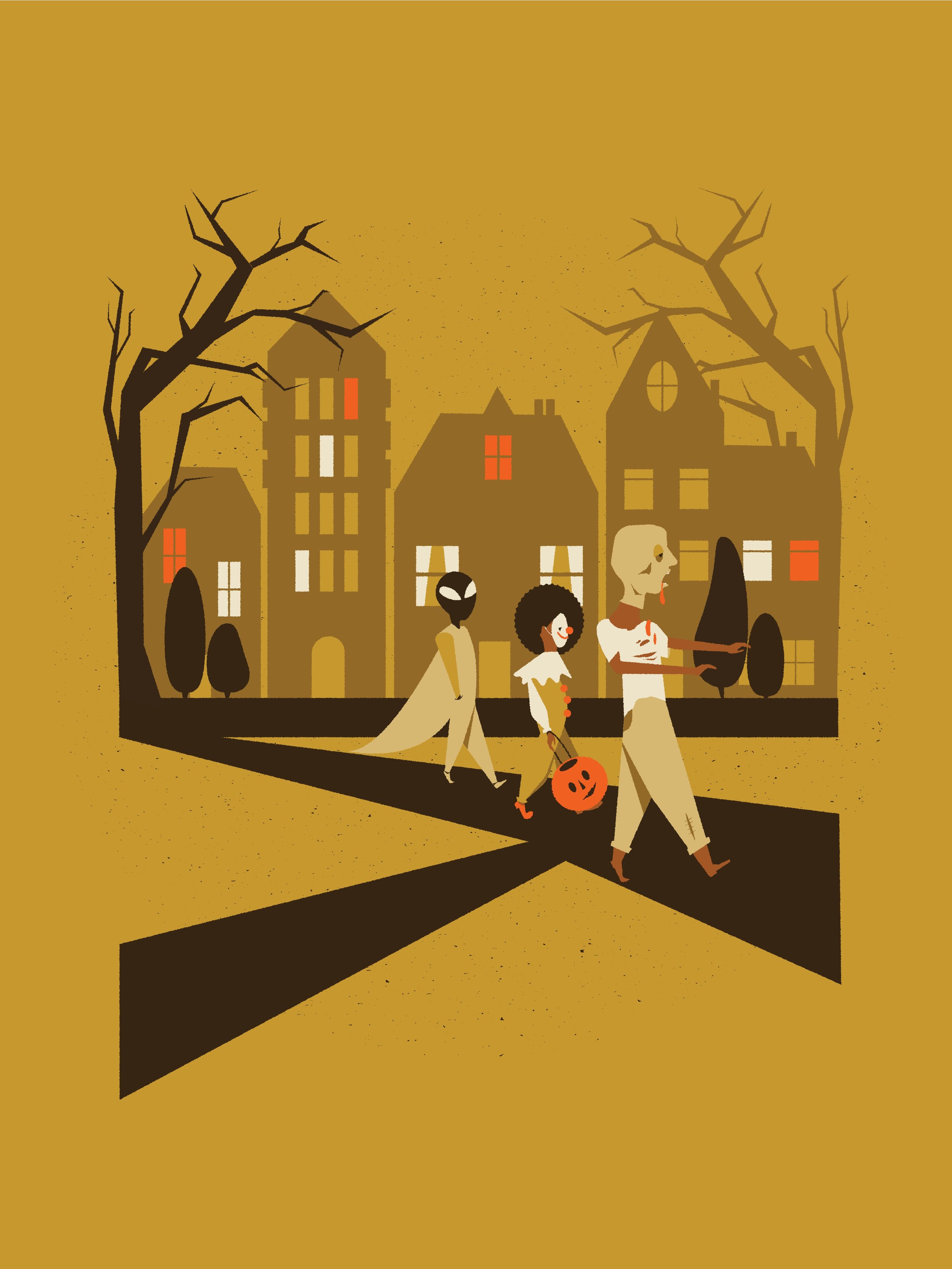
Illustration by Stacey Knipe via Unsplash
Common concerns, answered gently
“Won’t scary books cause nightmares?”
They can, especially if the story is mismatched to the child’s age or temperament, or read right before sleep. But the solution is curation, timing, and ideally, talking about it after story-time. When content is well-matched and adults are available to debrief, most children process fear successfully and even ask for more.
It can also be helpful to read scary stories during daylight hours, at first, at a time where there is still opportunity for sunshine, exercise, and play afterwards. This makes it easier to process frights.
“Isn’t horror just violence?”
Good children’s literature, including those with any degree of scariness, relies on atmosphere, not gore. It privileges the unnerving over the graphic, mystery over mayhem, and consequences over shock. Try to choose stories where ingenuity and empathy resolve the conflict, and where carefully crafted moods build the tense situation instead of bloodshed and cruelty.
“What if my child is highly sensitive?”
Some children won’t want to read scary stories. Some children prefer cozy-creepy (a mischievous ghost, a slightly too-curious cat) and will still benefit from practicing small doses of safe fear. Others may opt out entirely. All of this is 100% ok. Most children are aware of what they want to read and not read. If you ask and listen, they will tell you, and if you give them a book they’re not ready for, most children self-regulate and set things aside if they’re truly too scary.
That said, don’t try to avoid scary or intense stories at all costs. Books are safe places to explore myriad concepts and realities. Some will inevitably be scary. That’s an opportunity to develop perspective and empathy, which are necessary tools for everyone.
Reading scary stories together: simple practices
Pre-read or skim. Get the vibe, note any points where you may want to pause, or where you feel your child or students may not be ready.
Use pause buttons. If tension spikes, stop and check in: “What do you think happens next?” Predicting converts fear into curiosity.
Name feelings. “My stomach feels tight too. Let’s take a breath and turn the page together.”
Normalize opting out. Offer a safe exit: “We can close the book and try something silly instead. Want to?” Agency matters.
Debrief. Afterward: “What was the scariest part? What helped the hero? What would you try?” This is where growth and understanding can really take shape.
Conclusion
Books of all types, in all genres, offer the opportunity for exploration and discovery. Scary books especially allow us to examine the unknown and unknowable that we confront in real life. Age-appropriate horror, offered with warmth and wisdom, is a sturdy handrail. When a child closes a spooky book and says, “That was scary, but I was okay,” they’ve learned fear can be felt, understood, and carried. Fear can be faced and overcome.
In that sense, horror isn’t the dark corner of children’s literature. It’s a lantern, shining a light on the frightening and strange. It’s a way for children to dip their toes into the shadows, find bravery, courage, or even solace, and then hurry right back into the light, a little bolder than before.
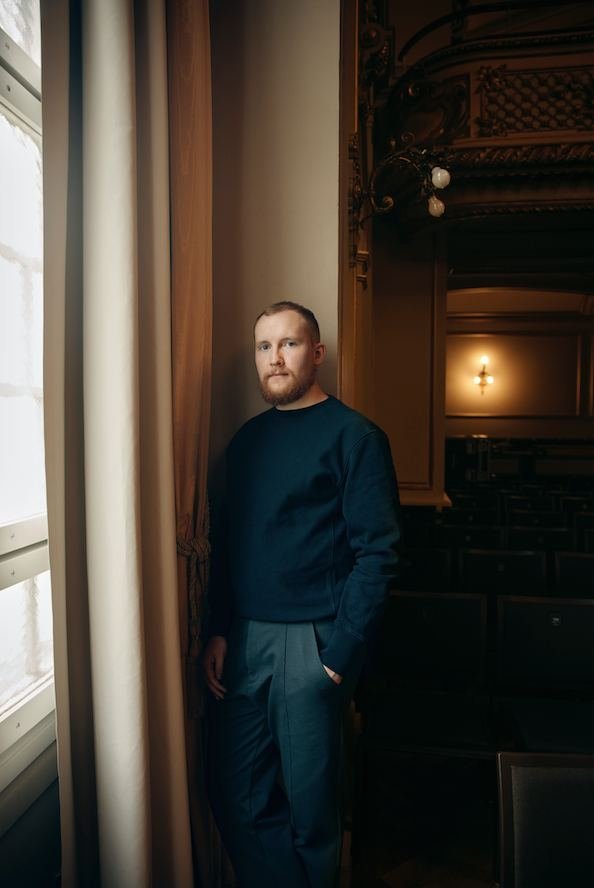
Stefan Bachmann
Editorial Director
Stefan Bachmann has worked widely in education, cultural programming, and literacy advocacy for over fifteen years. He is an internationally bestselling author of children’s books, co-founder of Foundations in Literacy, co-president of AUTILLUS, the Swiss Association of Children’s Authors and Illustrators, as well as a member of various advisory boards and committees around the world. He studied composition and theory at the Zürich University of Arts.

Sarah Y.'s illustrated, printable play-set turns a few sheets of paper into a castle, a river, a dragon, and a story. Use it in class for crafting time, storytime, and world-building.